
The best class music supports the movement instead of dictating it. A tempo around 100 BPM is a useful starting point, then match tracks to the class focus and the energy of each section. Streamlining Pilates class preparation also means deciding your sequence, cues, room setup, and timing before students arrive.
A thoughtful plan gives you more room to teach with clarity. Music can shape the atmosphere, but it’s only one part of a class that flows well. This guide covers choosing music, setting a clear focus, preparing the room, cueing with intention, adding variety, and pacing each section. Use it as a practical framework for building a cohesive session without making every class the same.
Key Takeaways
- Set up the room and equipment before students arrive, then leave space for a concise safety briefing and individual setup needs.
- Keep a familiar class structure while changing a few exercises or offering a variation to make the session feel fresh and adaptable.
- Use direct, timely cues that connect movement, alignment, and breath so students can follow the sequence with confidence.
- Give each class section a clear purpose and allocate time deliberately, with small buffers for transitions.
- Choose a single class objective to guide exercise selection; ReformerFlow can help instructors build a class using its library of over 400 exercises.
Table of Contents
- Preparing the room, equipment, and safety briefing
- Adding variety without changing everything
- Using clear cues and breathing instructions
- Allocating time to class sections
- Choosing a class focus and objective
- ReformerFlow by Ginty: ReformerFlow App Subscription
Preparing the room, equipment, and safety briefing
Reduce setup and cleanup time by staging each station before class and following the same reset sequence afterward. For a 60-minute class, reserve 3-5 minutes for the opening, including safety checks and setup notes.
- ### Prepare Reformer Pilates Equipment
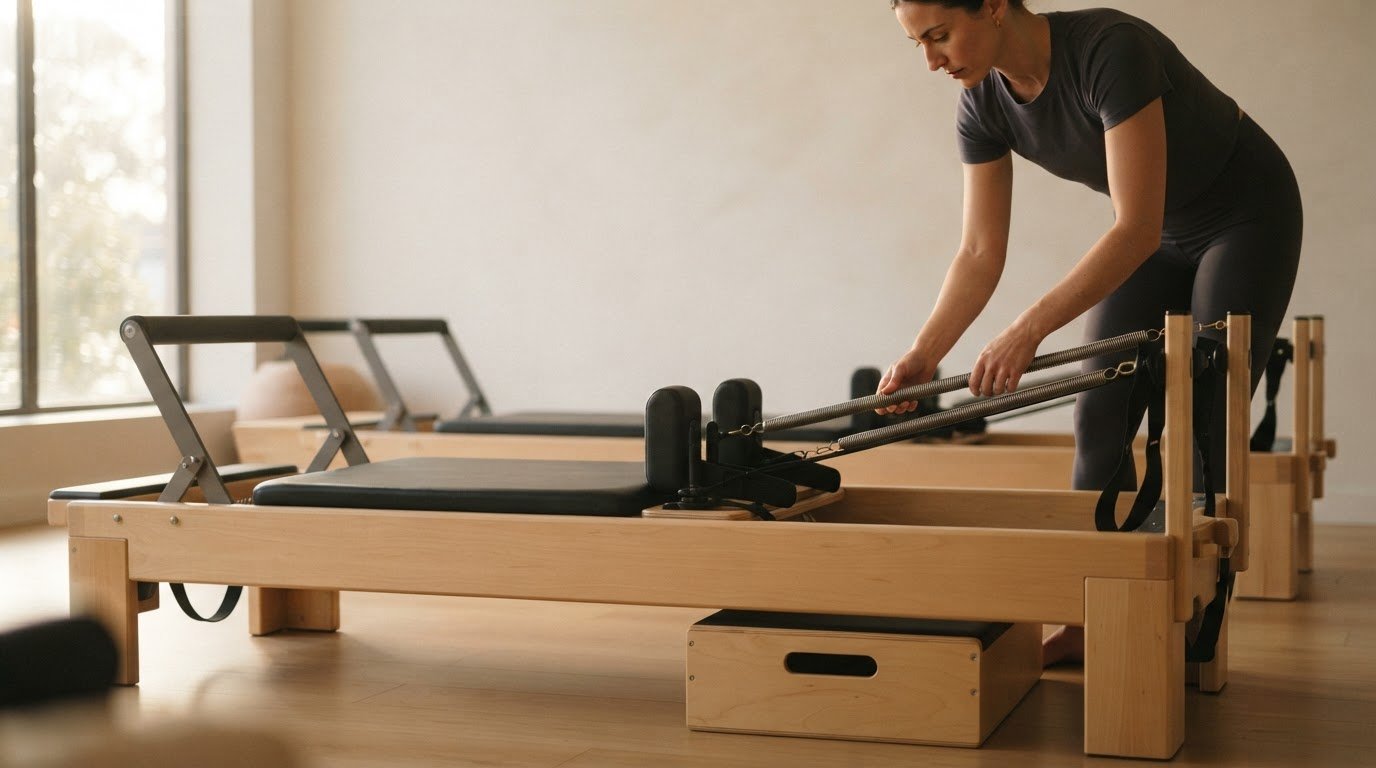
Set each Reformer for the opening exercise, then check the spring setup and clear the carriage area. Put planned props at each station so you don’t have to retrieve them mid-class. If the session uses several pieces of apparatus, group the equipment and accessories needed for the sequence, then remove anything unused. Reformer Pilates may also use a Wunda chair or Cadillac, so set out only what the session requires.
- ### Reduce Setup and Cleanup Time
Use the same station layout and reset order between classes. Return props to assigned places, clear walking paths, and note any equipment that needs attention before the next group arrives. Build 15-30 seconds of buffer time into the plan for equipment or mat changes. A consistent reset makes transitions easier to manage without cutting into the teaching sequence.
- ### Give an Introductory Equipment Briefing
Explain how students should approach the equipment before the first exercise. In an introductory equipment class or a first session for new participants, demonstrate the starting position and relevant spring setup. Keep the demonstration focused on what students need for the opening movement. Invite students to mention pain or discomfort, including neck or back pain, before class begins.
- ### Deliver a Concise Safety Briefing
Use the opening minutes to cover essential setup and safety points. Ask students to remove jewelry and accessories that could catch in the equipment springs. Students with long hair can tie it back to keep it away from their face during movement. Give clear instructions before students change positions or adjust equipment, rather than waiting until a transition is underway.
- ### Adapt Equipment Exercises for the Mat
When a class uses mats instead of apparatus, choose exercises with practical mat adaptations. Rowing can be taught with light hand weights, while a towel can help students slide their knees for Knee Stretches. Explain the purpose and placement of each prop before movement starts. This keeps the sequence coherent and helps students focus on the exercise rather than searching for equipment.
- ### Check the Room Before Students Arrive
Walk through the room from the entrance to each station. Check that equipment is accessible, props are ready, and students have space to move safely. This final pass helps you spot layout issues before they interrupt the class. A prepared room supports a settled atmosphere and leaves your attention free for clear instruction.
Adding variety without changing everything
Keep the session’s structure familiar, then vary selected exercises or movement options. Students can experience a fresh training focus without having to learn an entirely new sequence.
- Keep the class framework and refresh one section. For example, retain the same opening and closing while changing the central strength sequence. Familiar transitions help students follow along, while a clear purpose gives new work context. You don’t need to change the rest of the class just because one exercise is different.
- Offer a progression and a supported variation of the same movement. Place Half Roll Downs before the Roll Up, then invite beginners to continue with Half Roll Downs if they need more preparation. Students can work toward the full movement within one shared sequence. The variation offers choice without splitting the session into separate classes.
- Change the movement emphasis instead of replacing every exercise. A familiar sequence can focus on controlled articulation one week, then emphasize balance or coordination another time. State the focus before students begin and choose exercises that make it clear. This keeps your planning connected to the class objective and makes each variation feel intentional.
- Adjust one variable at a time. You might change the range of motion, the order of two exercises, or the transition between them. If a movement becomes unfamiliar, keep its setup and primary cue consistent. This makes it easier to observe how students respond and decide whether the change belongs in future sessions.
- Use a short practice as a place to test sequence variety. A 15- or 20-minute Pilates practice can include 25-30 exercises, so avoid adding movements without considering transitions and teaching cues. Instead, group related exercises and remove steps that interrupt the sequence. A clear progression matters more than novelty for its own sake.
- Repeat useful material with a new teaching focus. Students can revisit a familiar exercise while you highlight a different detail, such as control through the transition or steadiness during the movement. Keep the movement recognizable and make the cue the change. This builds continuity while giving returning students a fresh point of attention.
- Review the class plan after teaching. Note which variation helped students stay engaged, where a transition felt abrupt, and which exercise required extra explanation. Use those observations to refine the next session rather than rebuilding it from scratch. For more sequence ideas, explore a curated Reformer exercise library as one planning aid.
Using clear cues and breathing instructions
Give students one clear action at a time, linked to the movement they’re doing. In the studio, concise cues make the instructor’s sequence easier to follow, especially during transitions.
- Give the movement cue before the movement begins. Name the starting position, then identify the first action. For example: “Set your feet parallel, place your hands beside you, and prepare to roll back.” This gives students a moment to organize before moving. Avoid combining setup, alignment, breathing, and corrections in one long instruction.
- Choose one main point of attention for each exercise. For example, ask students to notice how their pelvis stays steady during a leg movement. Once that point is clear, add another cue only if needed. A stream of corrections can compete with the exercise itself. A focused cue helps students use the information while staying present.
- Make breathing instructions specific to the sequence. Tell students when to inhale, when to exhale, and which movements accompany each breath. For example, cue an inhale to prepare and an exhale during a controlled effort, if that pattern suits the exercise. Avoid saying only “breathe” during a challenging moment. Students need a usable prompt, not a reminder that breathing is happening.
- Place cues where students can use them. Give setup instructions before the transition, then offer the key movement cue as the exercise starts. For a roll-down, cue the first movement, then remind students to move with control as they return. Don’t save every detail for the beginning. A timely cue can support the next action without interrupting the flow.
- Adapt your language to the group’s experience. For beginners, explain unfamiliar movement terms with a short physical direction. An intermediate group may need less setup and more precise detail, such as maintaining a steady position through a transition. Listen for questions and watch how students respond. If several people pause at the same point, simplify the cue for the next repetition.
- Use consistent words for repeated actions. If “lengthen” means reaching through the spine in one exercise, avoid switching unpredictably among different descriptions. Connect the cue to a visible action, such as reaching the crown of the head forward. After class, note which phrase helped students move smoothly and which instruction needed clarification.
For a student with multiple joint replacements and a delicate neck, back, and shoulders, modify the Hundred rather than following the instruction to hold the feet 2 inches from the floor.
Invite students to save questions for the end of class so they can ask their Pilates instructor without disrupting the exercises.
Allocating time to class sections
A lesson plan should identify the class focus, exercise sequence, time for each section, transitions, and closing. A group Pilates class can last 30-60 minutes. Preparation time depends on how much sequencing, equipment planning, and student-specific adaptation the session needs.
- Choose the class duration before assigning exercises. Use the planned session length as your fixed boundary, then divide it into sections. A 60-minute plan can include an opening, warmup, strength flow, core integration, cooldown, and closing. Set each section’s purpose first. This gives every exercise a place and makes it easier to see when the sequence has become too crowded.
- Assign time to the opening and warmup. In a 60-minute class, allocate 3-5 minutes to the opening and 8-10 minutes to the warmup. Use the opening for a brief introduction, safety checks, and setup notes. Then prepare the body with movements that lead into the main work. A planned opening prevents setup details from spilling into the warmup.
- Protect the main strength flow. Set aside 18-20 minutes for strength work in a 60-minute plan. Choose exercises that build toward the class focus, rather than filling the block with unrelated movements. For example, a class emphasizing controlled leg work can progress through related exercises before changing position. Keep advanced options connected to the same sequence.
- Schedule core integration and cooldown separately. Reserve 10-12 minutes for core integration and 8-10 minutes for cooldown in a 60-minute class. This distinction helps the cooldown feel deliberate, rather than like extra exercises added after the main work. Include a stretch that supports the session’s focus, then allow students to settle before the closing.
- Plan transitions and the final minutes. Include 15-30 seconds of buffer time for equipment or mat changes. Allocate 1-3 minutes for the closing, including announcements and equipment cleanup. Mark transitions beside the relevant exercises, such as a change from standing work to the mat. That detail makes the timing easier to follow while teaching.
- Reconcile the minutes before class. Add the planned blocks and compare the total with the session duration. The listed section ranges can fill a 60-minute plan, so choose values that fit together rather than treating every maximum as fixed. If the total runs long, remove an exercise or shorten a transition. Keep the class focus intact.
Choosing a class focus and objective
Adapt a Pilates class by keeping one shared objective and adjusting the exercise, range, or challenge for each student. Match those choices to skill level, movement experience, and stated fitness goals. A defined objective also makes streamlining pilates class preparation more deliberate: it helps you select exercises with a clear purpose.
- Write the objective as an observable outcome. Choose a focus such as balance during standing work or control through a transition. Avoid broad aims like “work the whole body,” which offer little direction for exercise selection. A specific objective gives each movement a reason to be there and helps you decide what to remove if the sequence feels crowded.
- Choose movements that build toward the objective. If the focus is standing balance, arrange exercises so students first find a stable position, then add a controlled movement. Keep the progression connected. An exercise that doesn’t support the objective may distract from the teaching focus, even if it’s challenging or familiar to the group.
- Offer options within the same exercise. Keep students together by adapting range, pace, or complexity instead of assigning separate sequences. One participant can work through a smaller range while another explores more control or coordination. Give each option a clear purpose and describe it without labeling one version as the only correct choice.
- Match the entry point to experience. Mat Pilates is usually recommended for beginners, while Reformer classes can be more challenging. Use that distinction to decide how much setup and movement complexity your plan requires. For a mixed-experience group, explain the starting version first, then offer a progression for students ready for more.
- Adapt for individual movement needs. Modify exercises for students whose issues prevent them from attending a standard class. Consider which movement feels difficult, the range they can control, and whether a different position serves the same objective. For example, shift an exercise from standing to a supported position when balance changes the task, while keeping its intended focus.
- Check that the goal remains inclusive. Before teaching, scan the plan for exercises that assume everyone has the same range, coordination, or comfort. Add a simpler entry point and a more advanced option where appropriate. Use students’ responses during class to guide your next plan, noting which variation preserved the objective and which needs refinement.
- Connect the objective to your teaching cues. Briefly state the class focus at the start, then refer to it when introducing related exercises. If control is the aim, cue steadiness during both the movement and its transition. This makes the objective tangible rather than leaving it as a planning note students never hear. It also supports streamlining pilates class preparation by keeping your exercise choices and cues aligned.
Explore Reformer class-planning tools## ReformerFlow by Ginty: ReformerFlow App Subscription
ReformerFlow by Ginty offers the ReformerFlow App Subscription for instructors who want a more organized way to plan Reformer classes. Build a class in about five minutes using a curated library of over 400 exercises, with video, level, and spring-setup details. The app personalizes exercises to your Reformer machine, shows exact spring configurations, and includes a glanceable teaching mode for use during class.
It can help when you’re shaping a sequence, choosing variations, or keeping setup details close while teaching. The 14-Day Free Trial gives you a way to explore the app and its class-planning tools.
Visit reformerflow.app to explore ReformerFlow.
Make Your Next Class Plan Easier to Refine
Treat each class plan as a useful starting point, not a script you can’t adjust. After teaching, record one observation about the group’s response and one change you’d make next time. That brief review turns experience into a practical planning resource. Over time, streamlining Pilates class preparation becomes less about removing detail and more about knowing which details matter to your teaching.
Choose one element to refine for your next session. You might adjust a transition, clarify a cue, or select a variation that better supports the class objective. Make the change intentional, then notice its effect on the flow. A steady process helps you build clearer classes while leaving room to respond to students in the moment.
Explore the ReformerFlow App SubscriptionKeep learning from each class and let your next plan reflect what you’ve learned. Thoughtful preparation gives you more attention for the teaching itself.
Frequently Asked Questions
What’s the best way to plan class music?
Choose music that supports the class’s energy without competing with your cues. Arrange tracks to follow the session’s arc, with a measured opening, steadier movement during the central sequence, and a quieter finish. Listen through the transitions before class; abrupt changes can pull attention away from movement. Keep the volume low enough for students to hear spoken instructions clearly, especially during unfamiliar exercises.
What equipment and props should be ready before a Pilates class?
Set out the apparatus and props required for the planned sequence, rather than filling each station with unused items. For example, if the class includes mat-based Rowing, place light hand weights within reach. If Knee Stretches use towels, position them before class. Arrange items in the order they’ll be used to make transitions easier to follow.
Are there Pilates class planning templates or apps for instructors?
Yes. A simple template can record the objective, exercise order, transitions, cue reminders, and equipment needs for each session. Instructors teaching Reformer classes can also use a planning app to organize sequences and keep exercise details accessible while teaching. ReformerFlow is a mobile app option for this workflow. Choose a format that makes revisions easy, so you can capture what worked after class and refine the next plan.
What safety checks should instructors complete before a Pilates class?
Before students begin, scan each station for visible equipment issues, loose accessories, or obstructions in the movement area. Confirm that props are secure and students can enter and leave stations without navigating clutter. Review the planned sequence for transitions that need extra attention, then explain them before movement starts. If a student reports discomfort, adapt the exercise choice or range to suit the situation.
How should Pilates instructors structure a class for warm-up, exercises, and cooldown?
Start with movements that prepare students for the session’s main work, then build through exercises that support one clear objective. Place more demanding or complex movements after students understand the sequence, and avoid abrupt changes in position. Finish with a cooldown that lets the group reduce effort and settle. Link each phase with a clear transition so students understand how the class is progressing.
How long does it take to prepare a Pilates class?
Preparation time varies with the sequencing, equipment planning, and student-specific adaptations required. Set up the room and equipment before students arrive, and reserve 3-5 minutes of a 60-minute class for the opening and safety checks.