
Consistency doesn’t mean every instructor has to teach the same class. A practical approach to standardizing class quality across a Pilates studio sets shared expectations for class plans, progressions, equipment setup, and participant care while leaving room for each instructor’s judgment. Clear plans and useful handovers give the team a common framework.
It’s natural to want participants to have a dependable experience without making classes feel scripted. The goal is to make the essentials repeatable, so instructors can adapt thoughtfully to the people in the room instead of rebuilding each session from scratch.
This article explains how to define clear class standards, prepare substitute instructors with practical handovers, and use participant feedback to refine delivery. You’ll find a straightforward way to strengthen consistency while keeping teaching responsive and personal.
Key Takeaways
- Define the class qualities every instructor should deliver, while leaving room for individual teaching judgment.
- Use shared plans and progressions to make sessions easier to repeat as the studio grows.
- Give substitutes a practical handover with the class purpose, flow, equipment setup, alternatives, and timing notes.
- Review each plan for a clear purpose, suitable progressions, and enough time for setup and transitions.
- Use participant feedback to spot where a plan works well and where it needs thoughtful adjustment.
Table of Contents
- Reducing reliance on a small number of instructors
- Making class delivery repeatable as a studio expands
- Preparing substitutes with practical handovers
- Reviewing a class plan for suitability and coherence
- Testing and adapting a class plan with participants
- ReformerFlow by Ginty
Reducing reliance on a small number of instructors
Build shared standards around the class experience, not one instructor’s personality. A common plan, clear handovers, and individual reviews help the team deliver coherent sessions.
- ### Standardize Plans Across Instructors
Use one planning template for every instructor and session. Include the class purpose, level, exercise sequence, equipment setup, progressions, alternatives, and transition notes. Shared details make substitute teaching more reliable without requiring identical cues or teaching styles.
To standardize class plans across instructors, agree on the essential structure and review it together. Check that each plan supports its intended movement focus without becoming a script that prevents instructors from responding to participants.
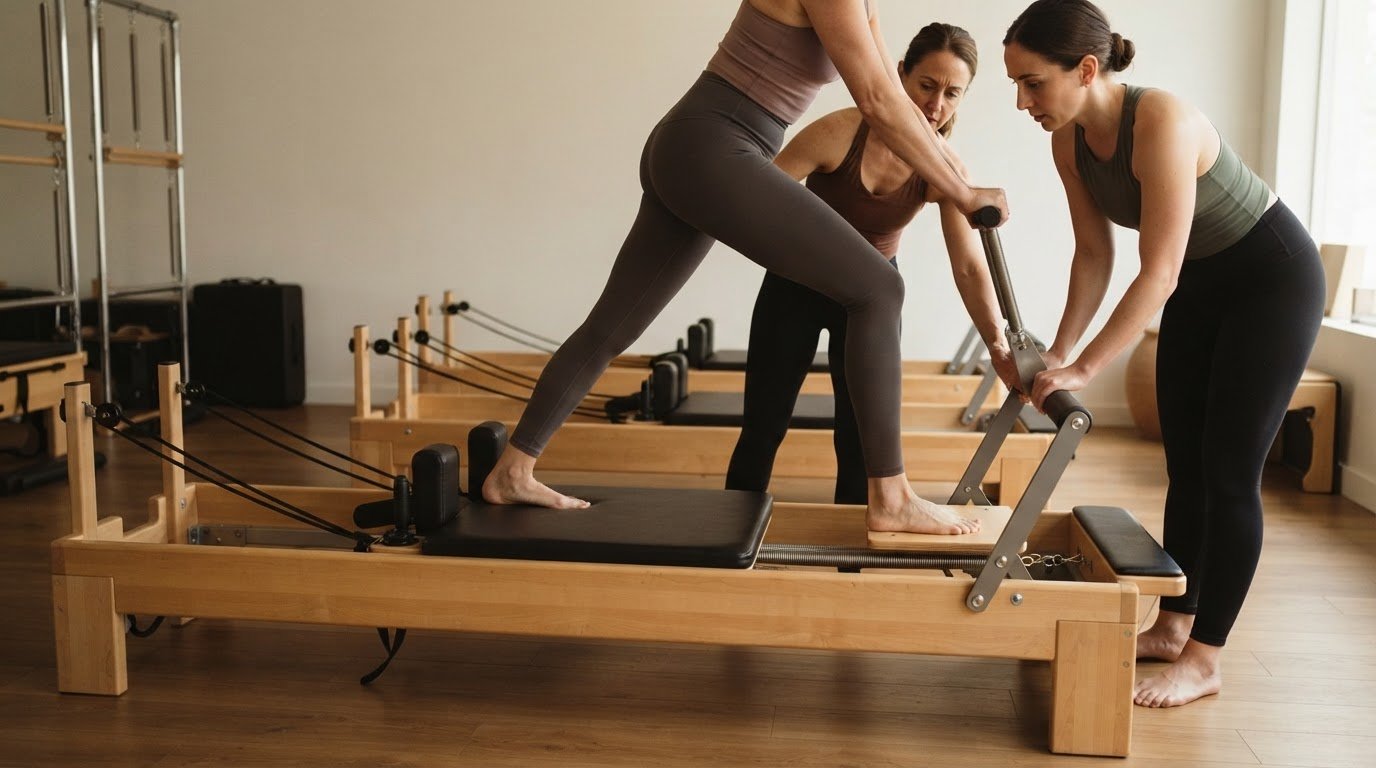
Map the instructor’s route through the studio before class. They need room to move between Reformers, demonstrate exercises, adjust client positions, check equipment, and offer individual instruction. Walk the planned route, then remove obstacles that interfere with access or visibility.
- ### Check Instructor Credentials and Training
Keep a consistent record of each instructor’s credentials, apparatus training, and relevant continuing education. Match teaching assignments to documented preparation, including Reformer experience and familiarity with the class levels being taught. A credential alone doesn’t show whether an instructor follows the studio’s shared class standards.
Set clear safety and emergency procedures for every instructor. Cover equipment checks, clear exits and movement paths, how to summon help, and when to stop a session if equipment or a participant’s situation raises concern. Review procedures during onboarding and reinforce them in team briefings.
- ### Observe Instructors and Track Retention
Observe each instructor on a regular schedule set by the studio, then reassess after a meaningful change in class format, teaching assignment, or participant feedback. No single observation interval suits every team. Set a recurring cycle based on the studio’s schedule and observed needs, rather than relying on informal impressions.
Use the same observation criteria for every instructor: clarity of class flow, suitable progressions, equipment setup, movement around the room, and individual attention. Give specific feedback tied to a moment in class, such as whether participants had enough time to transition between Reformer exercises.
Track attendance and retention by instructor, not just through studio-wide averages. Compare repeat bookings and participant returns for each instructor’s classes over the same review period. A popular time slot may fill while one class loses returning participants, so separate instructor performance from scheduling effects before deciding what to adjust.
Making class delivery repeatable as a studio expands
- Define the repeatable core of each class format before adding sessions or locations. Set out its purpose, intended level, movement focus, and progression. Then identify what should stay consistent, such as the order of major phases, and what instructors can adapt to suit participants. A shared structure makes standardizing class quality across a Pilates studio more practical as the team grows.
Use progression as the organizing principle, so each session has a clear direction instead of changing without a reason. Instructors can work toward a shared movement objective while adjusting exercise choices to suit the group. Treat the plan as a guide for professional judgment, not a script that overrides what an instructor observes.
Write the format for quick reference. Make the next exercise, its setup, and its place in the progression easy to find. For example, distinguish the core sequence from optional variations. This clarity helps instructors deliver the same class intention across schedules without making their teaching styles identical.
- Map the operating model before expanding capacity. A studio running classes across multiple locations needs a reliable way to keep class intent clear between sites. Document each class format, then store the current plan where the team can access it. When standardizing class quality across a Pilates studio, distinguish core teaching expectations from details that depend on participants and setting.
Review delivery across locations using consistent criteria: instructor training, class size, progression, new-client processes, and apparatus availability. Each can shape a session. A format may suit familiar participants but need clearer options when new clients join or the available apparatus changes.
Before adding a session, consider how its instructor, equipment, and participant mix fit the established structure. If the class serves a different level or purpose, make that distinction clear in its plan. This prevents the team from treating sessions as interchangeable when their teaching needs differ.
- Set a plan-review process for changes to the schedule, staffing, or studio setup. Ask instructors where a plan supports smooth delivery and where it creates friction. For example, note whether equipment availability affects the sequence or an exercise needs a clearer alternative.
Compare observations across sessions before revising the shared format. One instructor’s adjustment may suit a particular group, while recurring feedback may point to an issue with the plan itself. Record the reason for each revision so instructors understand the change and use the current structure consistently.
Keep each plan concise and practical as the studio grows. Scattered notes make it harder to follow a sequence across locations. For teams building Reformer sequences, digital class-planning tools can help organize planning as schedules expand.
Preparing substitutes with practical handovers
- Send the substitute a concise brief that names the class level and purpose. “Introductory Reformer class focused on controlled legwork” gives a clearer starting point than “usual session.” Include the participant profile when it affects the plan, such as a group with mixed experience. This helps the substitute understand the intended class before entering the studio.
Keep the brief specific to that session. A boutique studio may have a familiar format, but a substitute still needs the actual plan, not assumptions based on another instructor’s routine.
- Share the planned flow in teaching order, listing each exercise, its place in the sequence, and the transition that follows. For example, note when participants move from footwork to the next exercise and identify any equipment setup changes. Clear sequencing helps the substitute maintain the class purpose without assembling a session from scratch.
Write the flow so it’s easy to use at a glance. Avoid shorthand only the regular instructor understands, such as an unexplained exercise nickname. Add a short cue or objective when it clarifies why the movement belongs at that point in class.
- Record the Reformer setup and equipment checks the substitute needs before participants begin. Include the planned spring configuration for each relevant exercise, plus any later setup changes. Identify equipment that needs attention and what to do if it isn’t ready for use. Make the handover actionable, so the substitute doesn’t have to guess.
Pair each main exercise with a progression and an alternative. For instance, note how to simplify a movement for a participant who needs a less demanding option. This gives the substitute a practical way to respond while keeping the class aligned with its purpose.
- Add timing and transition notes, then name a contact for questions before class. State where setup or instruction needs more time, and flag transitions that may interrupt the flow. The contact should understand the plan and be able to clarify an exercise or equipment detail.
Close the handover with a brief update process. After class, ask the substitute to record what changed, which alternatives they used, and whether the actual setup matched the plan. The regular instructor can use these notes to improve the next handover instead of relying on memory or informal comments.
Keep the handover in one clear, usable note. Make the planned flow and setup details easy to scan alongside options for adapting each exercise. The substitute can refer to the class purpose while following the sequence, rather than treating each movement as an isolated instruction.
Place the contact detail near timing and transition notes, and keep equipment checks with the setup information. This makes the plan’s key parts easy to find before teaching. A complete brief brings together the class level and purpose, flow, equipment setup and checks, progressions and alternatives, timing and transitions, and a contact for questions.
Reviewing a class plan for suitability and coherence
A class quality checklist should cover purpose, level, sequence, progression, equipment setup, alternatives, timing, and transitions. Review these elements together to confirm the plan forms a coherent session, not just a collection of exercises.
- Start by stating the class purpose and intended level in one clear line. For example, a Reformer class might focus on controlled spinal movement for participants at an introductory level. Check that each exercise supports that purpose, and remove movements that shift the session toward an unrelated objective.
Then check whether the plan suits the participants expected in the room. A class designed for experienced clients may not give newer participants enough preparation. Note where an instructor can adapt an exercise without changing the class’s central focus.
- Read the sequence from beginning to end and assess its progression. Each exercise should prepare participants for what follows, rather than introducing a demanding position without context. For example, check whether earlier movements build the control needed for a later balance challenge.
Look for abrupt changes in body position, effort, or equipment setup. If participants move from supine work to standing work, include a clear transition and enough instruction. A logical sequence helps instructors maintain flow while giving participants time to understand each movement.
- Check every Reformer exercise for clear setup instructions. The plan should identify the equipment configuration and position required before participants begin. Consider whether the instructor can explain the setup while maintaining access to the group, especially when several Reformers need adjustment.
Next, pair key exercises with a progression and an alternative. A progression can add complexity when a participant is ready; an alternative gives the instructor another option when the planned movement doesn’t suit someone. Keep both connected to the same class purpose.
- Assess timing and transitions as part of the plan, not as details to improvise. Allow time for participants to change position, understand the next instruction, and adjust equipment. If a sequence includes several setup changes, check that the flow gives the instructor enough time to guide them.
For example, a plan that moves quickly between exercises may look complete on paper but feel rushed in practice. Mark transitions that need a demonstration or short explanation. This makes the class structure more practical to teach.
- Finish with a full checklist review before sharing the plan. Confirm that its purpose, level, exercise order, progression, setup, alternatives, timing, and transitions are visible. Read the plan from the instructor’s perspective, then identify any instruction that could be interpreted in different ways.
Use the same review criteria for every class format. Consistent checks make gaps easier to spot across Reformer classes while preserving room for instructors to respond to participants. Revise unclear details before the plan becomes a reference for the wider team.
Testing and adapting a class plan with participants
Collect specific feedback after class, then compare it with the instructor’s observations. Use recurring comments to assess which parts of the plan need adjustment, rather than changing the sequence after one unclear response.
- ### Collect Participant Feedback
Ask participants focused questions about their class experience. For example, invite them to name one movement that felt clear and one transition that felt rushed. A short conversation after class or a simple written prompt can surface useful details without asking participants to assess technical teaching standards.
Connect feedback to a specific class and its plan. Note the format, the exercise or transition mentioned, and whether the comment relates to pace, clarity, or difficulty. Don’t treat one person’s preference as a group pattern; gather responses across sessions before drawing conclusions.
- ### Adapt the Plan Using Feedback
Sort comments into practical themes, such as unclear instructions, difficult transitions, or an exercise that didn’t match the class level. Compare each theme with the instructor’s observations. If participants repeatedly describe a transition as rushed, revise that handoff or allow more setup time.
Keep the class purpose intact when making changes. For instance, simplify an exercise or add a clearer alternative without losing the movement focus. Record what changed and why, so instructors can teach the revised plan consistently and see whether the adjustment addresses the feedback.
- Test one purposeful change at a time. If you revise the wording for a Reformer setup and change the exercise order, it’s harder to tell which adjustment affected the experience. Keep the rest of the plan stable for the next class, then collect feedback on the specific change.
Ask instructors to note observable responses, too. They might record whether participants needed repeated demonstrations or moved smoothly into the next position. Combine these observations with participant comments to distinguish a teaching-clarity issue from a plan detail that needs revision.
- Review the revised plan with the team before sharing it as the current version. Confirm that the sequence still supports its intended progression and that another instructor can understand the updated cue or transition. Remove outdated notes so substitutes don’t follow an earlier version.
Keep a brief change record beside the plan. For example, note that a pause for setup has been added after a particular movement in response to repeated participant feedback. Revisit the change during a later review and keep it if it supports clear teaching and a coherent class experience.
Explore Reformer class-planning tools## ReformerFlow by Ginty
ReformerFlow by Ginty can support consistent Reformer class planning when instructors need a clear, reusable sequence. The app helps instructors build a class in about five minutes, drawing on a curated library of over 400 exercises with video, level, and spring-setup details. Plans are personalized to the instructor’s Reformer machine, with exact spring configurations and a glanceable teaching mode.
Use it to bring class planning into a more organized workflow while keeping instructors responsible for adapting sessions to participants. The ReformerFlow App Subscription includes access to the exercise library and class sequencing tools, and a 7-Day Free Trial is available.
Contact ReformerFlow by Ginty to discuss how it can fit your studio’s planning process.
Make consistency part of your studio’s rhythm
Choose one class format as your starting point. Agree on the experience participants should recognize, then let instructors refine the details through observation and feedback. This keeps standardizing class quality across a Pilates studio grounded in how classes are taught, not just how plans look on paper.
Set a practical review rhythm your team can maintain. Use it to identify where instructors need clearer guidance, where participants respond well, and which adjustments should become shared practice. Considered updates can strengthen a studio’s teaching culture without turning every session into a script.
As your team develops its approach, keep the process useful for instructors and participants alike. A clear framework gives instructors room to teach with intention and helps your studio build a more consistent experience.
Contact ReformerFlow by GintyTake the next step at a pace that suits your team. Consistency grows through thoughtful practice.
Frequently Asked Questions
How can a Pilates studio define consistent class quality standards?
Define quality through observable parts of the participant experience, then describe what each looks like in practice. For example, “clear transitions” can mean participants know where to move and what to adjust before the next exercise begins. Include how instructors welcome new participants, explain equipment, and close a session. Concrete descriptions help the team discuss delivery consistently without requiring identical personalities or cueing styles.
How can Pilates instructors be trained and evaluated consistently?
Use the same onboarding sequence and observation rubric for each instructor. Pair a new team member with an experienced instructor to observe a class, then review one specific teaching moment together, such as how an exercise was demonstrated. In later reviews, record examples against shared criteria instead of relying on general impressions. This creates a clearer development conversation and helps identify where additional practice or guidance would help.
How can a Pilates studio adapt standardized classes for different fitness levels and injuries?
Keep the class objective consistent while offering choices in range, resistance, pace, or exercise variation. For example, an instructor can present a simpler option alongside a more challenging version, then observe how participants respond. Ask participants to share relevant movement limitations before class, and avoid diagnosing an injury or promising that an exercise will treat it. Adapt within the instructor’s scope and prioritize clear, comfortable options.
What metrics can measure Pilates class quality and client retention?
Combine participant experience measures with attendance patterns. Track repeat bookings, cancellations, and returns to class by instructor and format, then compare those patterns with brief feedback on clarity, pacing, and connection to the class purpose. For example, if participants attend consistently but report confusion during one section, the plan may need clearer instructions. Review measures together: attendance alone doesn’t explain why people return or stop booking.