
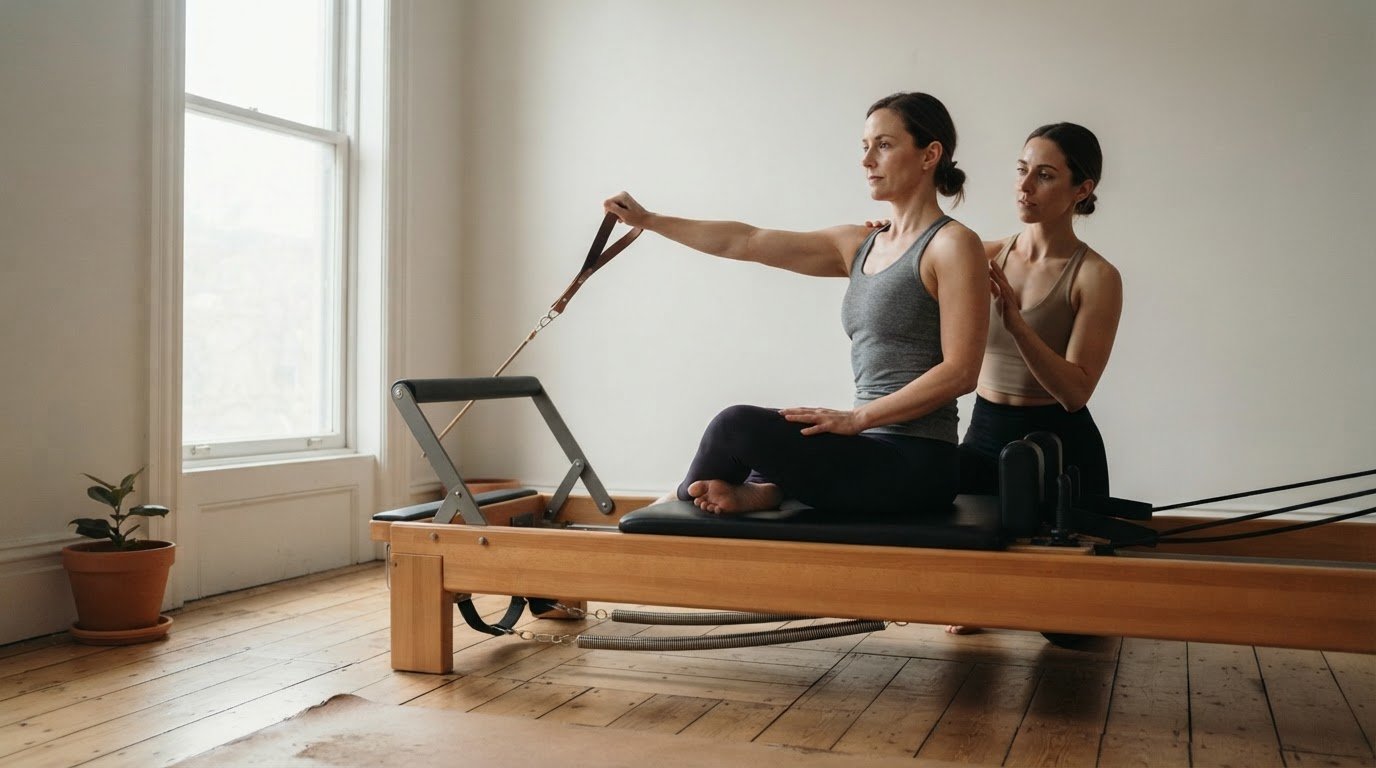
A private Reformer session works best when the plan follows the client, not a fixed sequence. To plan private Reformer Pilates sessions, book one client with a specific instructor, reserve the Reformer for the appointment, and shape the session around the client’s availability and needs that day. Prepare a clear plan, but be ready to change an exercise if it isn’t working.
Individual attention can make a private session valuable, especially for a client who needs focused instruction or a more personal pace. The practical challenge is coordinating instructor time, equipment, and client schedules while staying present enough to adjust your cues as the session unfolds.
This guide breaks the process into clear steps. You’ll learn how to organize instructor availability and equipment, build a timetable around client schedules, balance conversation with movement cues, and change course when an exercise isn’t working. The goal is a session that feels prepared without becoming rigid.
Key Takeaways
- Block instructor time and reserve the reformer for each one-to-one appointment so equipment and availability stay aligned.
- Build the timetable around client schedules, with a 15-minute gap between back-to-back sessions for notes, cleanup, and reset.
- Keep cues focused, and explain an exercise’s relevance when the client is ready to hear it.
- When an exercise isn’t working, adjust the plan to suit the client’s needs that day.
- Use ReformerFlow’s exercise library and sequencing tools to prepare sessions with clearer spring and teaching details.
Table of Contents
- Setting instructor availability blocks and equipment needs
- Timetable planning around client availability
- Balancing conversation with movement cues
- Changing course when an exercise is not working
- What private Reformer Pilates involves
- ReformerFlow by Ginty
Setting instructor availability blocks and equipment needs
Schedule each private Reformer appointment for one client, one instructor, and a reformer reserved for that session. Compared with group classes of 3-12 clients, one-to-one instruction gives the instructor’s attention to one person; mat Pilates doesn’t require reserving a reformer.
- ### Account for Equipment Needs
Reserve the Reformer for the full private appointment, then confirm that it’s available before offering the time. A Reformer used for a private session can’t also be used for a duet at the same time. Tie the equipment assignment to the booking, rather than treating the Reformer as available simply because the room is open.
List any other equipment the planned exercises require, then make sure it’s ready before the client arrives. For example, if the plan includes a prop, note it alongside the Reformer reservation. This simple equipment check helps prevent a booking from promising a setup that isn’t ready.
- ### Coordinate One-to-One Instruction
Match each appointment with an instructor who can give the client focused attention throughout the session. Before confirming the time, align on the client’s goals, relevant movement history, and what the instructor plans to observe. One-to-one instruction creates room to tailor exercise choices and cues to the person in front of the instructor.
Agree on the instructor’s pay arrangement before scheduling recurring appointments. Set out how it works for completed sessions, cancellations, and preparation time. Keep the terms clear between the studio and instructor, rather than leaving payment details unresolved after sessions begin.
- Block instructor availability first. Ask instructors for their available time windows, then mark those blocks before opening private appointments. For example, an instructor available early Tuesday can be assigned a matching slot instead of being booked across overlapping commitments. Keep the booking duration consistent with the session format the instructor will teach.
Build the calendar around actual instructor availability, not just open room time. If an instructor teaches a group class, don’t schedule a private appointment over that commitment. A clear calendar shows the assigned instructor and Reformer, making conflicts easier to spot before a client confirms.
- Protect setup and transition time. Leave 15 minutes between back-to-back private sessions for notes, cleanup, and a reset. That gap gives the instructor time to record what happened and prepare the reformer for the next client. Don’t fill the transition with another appointment; the reset is part of a workable schedule.
For instance, a session ending at 10:00 should not be followed by another starting at 10:00. Use the interval to restore the equipment and review the next client’s plan. The instructor can then begin prepared, rather than carrying details from one appointment into another.
- Make the booking format clear. Label each slot as private, duet, or group, and match it to the right equipment capacity. A private appointment reserves one Reformer for one client; a duet uses two client places and needs suitable equipment for both. Keep the booking type visible so instructors aren’t left with an unexpected format.
Review the calendar whenever a booking changes. If a private client moves, release the Reformer only after the appointment has changed. This keeps availability accurate for the instructor and prevents the same equipment from being offered for another session at the same time.
Timetable planning around client availability
Build the timetable around client availability and the instructor’s working blocks. Keep session duration, check-ins, and progress notes visible alongside each booking.
- Map demand against available times. Identify the windows clients can attend, then match them to instructor availability. Early mornings from 6:30 to 8:30am and early evenings from 5:30 to 7:30pm can suit working adults. Late mornings from 9:30 to 11:30am may work for parents after school drop-off and retired clients. Use these patterns as a starting point, then plan around each person’s actual schedule.
- Match each client with an instructor. Consider the client’s goals, preferred communication style, and the instructor’s relevant experience. Keep the same instructor where possible, so observations from one session can inform the next. If schedules require a change, share the client’s intake details and recent progress notes with the incoming instructor. A short written handover helps preserve continuity better than relying on memory alone.
Record the client’s preferred times and practical scheduling limits. Studios commonly let clients book up to two weeks in advance. A consistent booking window makes recurring appointments easier to coordinate while leaving room for changes in the client’s routine.
- ### Check In With Clients
Build a brief check-in into the start of each appointment. Ask an open-ended question about what has happened since the previous session, then listen for changes that could affect the day’s practice. Before movement, ask about current pain, injuries, or movement restrictions, and check that the Reformer is set up as planned.
Watch how the client moves during the session. If they report discomfort or you notice they can’t control an exercise, pause and adapt instead of pushing through the plan. Record relevant observations so the next instructor has useful context.
- ### Set Session Length and Attendance Frequency
Choose a session length that fits the client’s focus and the studio timetable. General private lessons can run 50 to 60 minutes, with 55 minutes the most common length; some studios offer 30-minute sessions for focused work or tune-ups. Confirm the duration when booking so the client and instructor share the same expectation.
Set attendance frequency according to the client’s goals, available times, and response to practice. Avoid imposing a fixed cadence without considering those factors. Review the schedule as the client’s needs change, and make progress notes specific enough to guide the next appointment.
For exercise sequencing, a Reformer class-planning tool can help organize exercise choices and spring details before the session.
Balancing conversation with movement cues
- Open with a brief check-in, then let movement lead. Ask the client what has changed since the previous session. Listen for details that could shape today’s practice, then move into the first exercise. If the client mentions a demanding workday, acknowledge it without turning the session into an extended conversation. Keep the exchange useful, specific, and connected to what they need now.
During Reformer Footwork, observe how the client responds before adding more instruction. A short cue such as “keep the movement smooth” gives them space to feel the carriage. Pause between cues so the client can process one direction and respond through movement.
- Choose cues that connect an action to its purpose. Explain how an exercise relates to the client’s situation, using words they understand. For example, connect controlled carriage movement to their goal of moving with more steadiness. Offer the explanation when the client is receptive, rather than speaking over effort or concentration.
Keep each cue tied to the movement in front of the client. If they’re adjusting their foot placement, avoid adding a separate explanation about the whole sequence. A clear, relevant instruction reduces competing information and helps the client stay with the exercise.
- Match conversation to the demands of each exercise. Use transitions or pauses for questions that need more than a brief answer. During focused movement, keep language concise and give the client time to respond physically. For instance, save a longer discussion about the client’s goals for a rest between exercises, rather than starting it during a demanding sequence.
Notice when the client’s attention shifts from movement to conversation. If they stop following the carriage or lose the rhythm, pause the discussion and return to one clear cue. The aim isn’t silence. It’s a conversation that supports the practice instead of competing with it.
- Adjust the amount of explanation to the client’s response. If a client asks why an exercise is included, answer directly and relate it to their stated needs. If they’re concentrating on a movement, keep the explanation short and return to the cue. For example, explain the purpose of a sequence during setup, then use concise prompts as the client performs it.
Check understanding through the client’s next movement, rather than repeating the same instruction more loudly. If a cue doesn’t help, rephrase it as a concrete action. “Press the carriage away smoothly” may be clearer than an abstract direction about control.
- Close with a useful observation. Before the session ends, remind the client what went well and point out their successes. Name a specific moment, such as maintaining a steady rhythm through Footwork or responding to a changed cue. This connects the conversation to the work they completed.
Keep the closing comment grounded in what you observed. Avoid generic praise that could apply to any session. A specific observation helps the client understand their progress and gives the next conversation a practical starting point.
Changing course when an exercise is not working
Plan a sequence, but treat it as a framework that responds to the client’s needs that day. A useful principle for how to plan private reformer pilates sessions is to make exercise choices adjustable, not mandatory.
- ### Choose Exercises and Progressions
Start with a movement the client can perform with control, then observe their response before progressing. If they maintain a steady carriage through Footwork, build from that foundation. If their control slips or they can’t follow the movement, reduce the challenge or choose a different exercise.
Let the client’s movement guide the next choice instead of relying on a fixed level label. Even a familiar exercise may feel different from one session to the next. Don’t progress just because the next exercise appears in the plan; use the client’s response to decide.
- Pause when the movement stops working. If the client reports discomfort, loses control, or can’t follow a cue, stop and ask what they notice. Clarify whether the difficulty relates to the position, movement, or instruction. Their response helps you decide whether to adjust the cue, modify the exercise, or move on.
Don’t repeat an ineffective cue without changing your approach. If “press the carriage out” isn’t clear, demonstrate the action or use simpler language. If the client still can’t perform the movement comfortably, choose another exercise instead of making completion the goal.
- ### Adapt for Injuries, Pregnancy, or Health Conditions
Ask about current movement limitations before choosing exercises, then check in if the client’s comfort changes. Adapt the exercise, range, or position to the needs they describe. Don’t assume one movement suits every client with a similar injury, pregnancy, or health condition.
If a position feels uncomfortable, stop and offer a different exercise that fits the client’s needs. Keep the instructor’s role focused on adapting Pilates practice, not diagnosing or treating a health condition.
- Offer a practical alternative. Identify the original exercise’s intended focus, then choose a different movement that supports the session’s purpose. If the client struggles to control a sequence, simplify it or select a more familiar exercise. Briefly explain the change so the client understands the adjustment.
Use what you observe to decide whether to continue, modify, or replace the movement. Knowing how to plan private reformer pilates sessions means leaving room for that judgment, rather than treating the planned sequence as fixed.
- Record what changed. After the session, note the exercise that didn’t work, the client’s feedback, and the alternative you chose. For example, record that a position felt uncomfortable and identify the replacement movement. This gives the next session useful context without requiring the instructor to rely on memory.
Keep notes factual and specific to that session. Don’t turn one response into a permanent rule; reassess the movement when the client returns, since their needs may have changed.
What private Reformer Pilates involves
A private session gives one instructor time to observe one client and tailor exercise choices to that person’s needs. A 50-minute example can move from Reformer work to optional Mat work, individualized exercises, and an invigorating finish.
- ### Identify Session Goals
Ask the client to name a practical focus for the session, then connect exercise choices to that aim. For example, a client who wants to become more familiar with the Reformer can focus on understanding the carriage and spring setup while practicing controlled movements.
Keep the goal specific enough to guide choices, but flexible enough to respond to what you observe. Avoid promising a particular health outcome. Instead, agree on what the client wants to practice and what you’ll observe during the session.
- Begin with observation. Use the opening Reformer work to see how the client moves before choosing individualized exercises. In the ABCD approach, the instructor observes the student during Reformer and Mat portions, then selects exercises based on those observations. The label isn’t directly attributed to Joe Pilates, though the concept is described as originating with him through Jay Grimes.
That sequence makes the session responsive rather than preset. If the client’s movement suggests a different focus, adjust the planned exercises to match what you’ve observed.
- ### Outline a Sample Session Structure
Arrange a 50-minute session in a clear progression: begin with Reformer work, add Mat work if it suits the client, select individualized exercises, and finish with an invigorating ending. Reformer Footwork can provide an opening exercise, with the client lying down and the trunk supported by the moving platform.
Use the observed movement to decide which individualized exercises belong in the session. One example places Mat work before a personalized portion that takes around ten minutes; another practitioner completes Mat exercises in 30 minutes before moving to individualized work. Treat these as examples, not fixed timings.
- Keep the sequence adaptable. Studios may also offer 30-minute private sessions for focused work or tune-ups, while 55 minutes is the most common private-session length. Let the booked duration shape the plan, and prioritize the client’s agreed focus rather than trying to fit every exercise into the session.
Before ending, name a specific success from the session, such as completing a selected exercise with greater control. That closing observation gives the client a clear takeaway and helps frame the next practice.
Plan Reformer sessions with an exercise library## ReformerFlow by Ginty
ReformerFlow by Ginty helps instructors turn an individual client’s goals into a considered Reformer session plan. The app brings exercise selection, sequencing, and teaching cues into one mobile workflow, helping you organize preparation while keeping the session responsive to the client.
Build a class in about five minutes from a curated library of over 400 exercises, with video, level, and spring-setup details. ReformerFlow also personalizes exercises to the instructor’s specific machine, showing exact spring configurations and a glanceable teaching mode. That makes it useful when you want a clear sequence prepared before teaching, without treating the plan as fixed if the client needs a change.
The ReformerFlow App Subscription includes access to the exercise library and class sequencing tools, and a 7-Day Free Trial is available. For support with planning your Reformer sessions, contact ReformerFlow by Ginty.
Let each session plan keep evolving
The best answer to how to plan private reformer pilates sessions is to treat each plan as a working framework, not a script. Let client feedback and your teaching observations shape what you prepare next. Over time, small adjustments can help you build a consistent practice without making every appointment identical.
Choose one useful reflection after each session: what helped the client engage, what needed adjustment, or what deserves more attention next time. Carry that insight forward while leaving room for the client’s needs to change. Thoughtful planning supports a composed teaching experience and a more personal session.
Contact ReformerFlow by GintyKeep refining your approach, one client and one considered session at a time.
Frequently Asked Questions
Private Reformer Pilates Sessions: Are They Worth It?
Private sessions can suit a client who wants the instructor’s full attention or a practice shaped around individual goals. Unlike in a group class, the instructor can respond directly to one person’s movement and questions. For example, a client learning Reformer fundamentals can spend more time understanding each exercise. A group class may suit someone who prefers shared instruction and a set format.
How to assess a client before planning private reformer Pilates sessions?
Start with a short intake focused on the client’s goals, Reformer experience, preferences, and any movement limitations they report. Ask what they want from the appointment, then clarify what kinds of movement feel comfortable. For example, a beginner may want to understand basic equipment setup, while an experienced client may want to work on a specific movement pattern. Use observation to refine the plan, not to diagnose.
What equipment and studio setup are needed for a private reformer Pilates session?
Prepare a Reformer that can be adjusted for the planned exercises, and set out only the accessories those movements require. Before the client arrives, check the carriage, straps, footbar, and springs, then make sure the surrounding area allows the instructor to observe and cue movement. For example, a plan that includes Mat work also needs clear floor space. Keep unneeded props out of the way.