
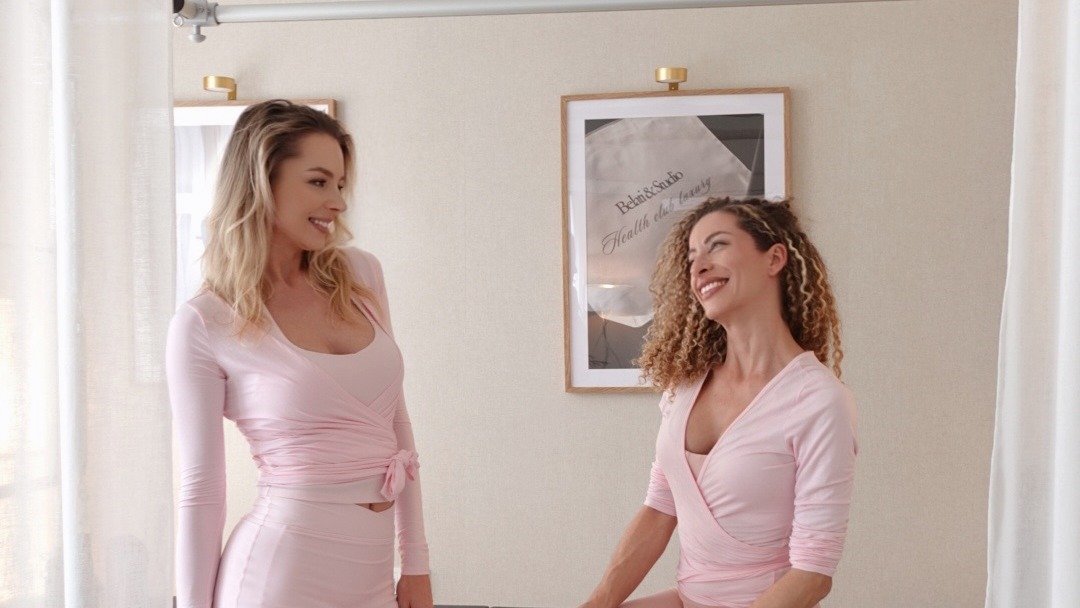
A Reformer class doesn’t start with complicated choreography. The essential exercises for a beginner Reformer class are foundational movements such as footwork, the Hundred, and leg circles, performed with control against adjustable spring resistance. The moving carriage and springs let instructors tailor resistance while beginners focus on alignment, breathing, and coordination.
It’s natural to wonder how the machine works and whether you need experience before getting on it. You don’t need to know every exercise in advance: a well-paced beginner class introduces the equipment, teaches basic movement principles, and builds from simple patterns. This guide explains how the Reformer works, what foundational exercises develop, and how to choose a class and instructor. You’ll also learn how movements such as the Elephant and Mermaid can build control and mobility, so you have a clearer idea of what to expect in your first session.
Key Takeaways
- Understand how the Reformer’s moving carriage and adjustable springs shape the workout.
- Learn what footwork, the Hundred and leg circles can teach about alignment, breathing and control.
- See how spring resistance and exercise choices can be adapted to a beginner’s level.
- Recognize the features of a beginner-friendly class, including gradual progressions and clear equipment guidance.
- Explore how foundational movements such as the Elephant and Mermaid can build control and mobility.
Table of Contents
- 1. Benefits of reformer Pilates
- 2. Foundational Reformer exercises: footwork, the Hundred, and leg circles
- 3. Reformer equipment and adjustable resistance
- 4. Choosing a beginner class and qualified instructor
- 5. Beginner Reformer exercises
- ReformerFlow by Ginty
1. Benefits of reformer Pilates
Reformer Pilates uses a Pilates Reformer with a moving carriage, footbar, straps, and adjustable springs. As the carriage moves, the springs provide resistance, so each movement asks you to control both the effort and the return. The instructor can adjust spring tension and range of motion to suit the exercise. This gives beginners useful feedback about alignment, posture, and control.
Mat Pilates usually relies on bodyweight and the floor for resistance. Reformer Pilates adds spring resistance and a carriage that moves beneath you. For example, pressing the carriage away with your feet and returning it slowly asks you to manage both directions. Straps can provide support or resistance, too. The machine changes how an exercise feels, but steady breathing and deliberate movement still matter.
For beginners, that feedback can make foundational Pilates concepts easier to practise. Controlling the carriage on its return encourages you to pay attention to pace, while the footbar gives your feet a clear contact point. Instructors can cue breathing alongside movement, helping you coordinate the two instead of rushing through repetitions. You can also notice how your posture changes as your legs, arms, or trunk move. These skills build a thoughtful foundation before exercises become more demanding.
Regular Pilates training can bring measurable changes in flexibility and muscle endurance after 12 weeks. That timeframe describes a reported training outcome, not a guaranteed result for every beginner. The practical benefit of starting with beginner exercises is learning control before adding complexity. The essential exercises for a beginner Reformer class should let you practise range, coordination, and breathing without treating intensity as the main measure of progress. Consistent technique gives the instructor clearer information about how to adapt each movement.
Reformer Pilates with back pain calls for individual judgment, not a universal exercise list. If you have a back, knee, or neck injury, avoid movements that cause pain or make you compensate, and tell the instructor before class so they can adjust the exercises. Discuss a recent injury with a healthcare professional before participating. If you have uncontrolled hypertension, a recent cardiac event, or an acute fracture, consult a healthcare professional before taking part.
Wear form-fitting clothing that allows movement, and bring grip socks for class. Arrive 10-15 minutes before your first session to get familiar with the equipment and share relevant injury or movement information with the instructor.
2. Foundational Reformer exercises: footwork, the Hundred, and leg circles
Three foundational movements feature in many beginner Reformer workouts: footwork, the Hundred, and leg circles. They introduce lower-body alignment, breath coordination, and hip control without requiring complex choreography. In a beginner class, an instructor can teach each exercise on its own before connecting the movements into a sequence. Together, these essentials show how the machine can support strength and controlled movement.
Footwork usually begins lying on the carriage with your feet on the footbar. Press the carriage away, then bring it back with control. The footbar gives you a clear reference point as you practise keeping your knees aligned with your feet. A parallel-foot position is one way to explore the movement; your instructor may suggest another position to shift the emphasis. Notice whether both legs move evenly, and keep the return smooth rather than letting the carriage pull you in. This simple exercise connects foot placement, knee tracking, and carriage control.
The Hundred adds breathing and arm coordination. Beginners can keep their knees bent at 90 degrees, with shins parallel to the floor, rather than extending the legs. As the arms pulse, inhale for 5 pulses and exhale for 5. The goal is a steady rhythm between breath and movement, not bigger pulses or a longer lever. If the coordination feels unfamiliar, maintaining the bent-knee position gives you a simpler version to practise.
Leg circles use straps to support the feet while the legs move through a controlled range. Keep a neutral spine and begin with small circles, especially if a wider range changes your position. After 10-12 repetitions in one direction, reverse the circles. Some sequences lower the legs to 45 degrees, but the range should remain controlled. The straps give the legs support while the trunk works to stay steady. Smaller circles are useful when technique starts to slip; they preserve the pattern without forcing extra range.
In a class sequence, footwork can establish carriage control before the Hundred introduces breath timing. Leg circles can follow, adding hip mobility and coordination with straps. That order moves from a stable footbar position to more moving parts. It isn't the only possible sequence, since class plans vary, but it gives beginners a clear progression. Standing work may appear elsewhere in a workout, yet these three supine exercises offer a focused starting point. Instructors planning a balanced class can use Reformer exercise sequencing tools to organize foundational movements.
3. Reformer equipment and adjustable resistance
A Pilates Reformer has a frame, moving carriage, footbar, straps, and springs. The carriage travels along the frame as you push or pull against spring resistance. The footbar gives you a stable contact point for movements such as footwork, while straps connect your hands or feet to the spring system. Each part changes how your body interacts with the machine. Knowing the equipment helps beginners follow setup cues and move with control.
Springs provide resistance and affect how steady the carriage feels. Pressing away from the footbar loads the springs; a controlled return manages their pull. In strap work, the springs resist as your arms or legs move. Because the carriage responds to your effort, a smooth exercise requires attention during both the outward phase and the return. Control means neither letting the springs pull you abruptly nor forcing the carriage through its range.
Spring settings should suit the exercise and the student, rather than follow one rule for every movement. Beginners generally start with lighter spring tensions and progress gradually. However, lighter doesn’t always mean easier: less resistance can make a moving carriage harder to stabilize. In another exercise, stronger spring tension may take more effort to press the carriage away. The instructor considers the movement, body position, and your control before selecting a setting.
That distinction matters in a Reformer Pilates class. For example, a student learning to press the carriage needs enough support to keep the movement deliberate. If the carriage moves too quickly, they can shorten the range and focus on a steady return. If the springs make the press difficult to control, the instructor can adjust the setup. The aim is clear movement, not the heaviest setting or chasing fatigue.
Adjustments also shape how an exercise feels in different positions. A supine movement, performed lying on your back, places the carriage and spring pull differently from a kneeling or standing movement. Straps change the connection again: even a small arm movement can shift the carriage, so settled shoulders help you maintain control. That’s why spring choices depend on the full setup, not just a label such as “beginner” or “advanced.”
Before each exercise, listen for the instructor’s spring instructions and wait for the setup cue. Don’t change springs while your body or the carriage is under tension. During the movement, notice whether you can control both directions and maintain the intended position. If the carriage feels abrupt or the movement loses its shape, pause and tell the instructor. Your feedback helps them adjust the resistance, range, or exercise so you can practise with control.
4. Choosing a beginner class and qualified instructor
A beginner Reformer class should introduce the equipment, explain basic movement principles, and progress gradually. Look for a class description that names foundational Pilates exercises rather than promising advanced choreography from the outset. For example, an instructor might first demonstrate how to get onto the carriage and identify the footbar and straps. That orientation helps you understand the setup before moving into exercises that challenge flexibility, balance, or coordination.
Class structure matters as much as the exercise list. A gradual session might move from a stable position on the carriage to strap work, then introduce a more challenging variation. Look for clear explanations of how to begin and finish each movement. The carriage slides beneath you, so beginners need time to learn to control it. A class that treats every exercise as fast-moving choreography may leave little time to understand alignment.
Instructor preparation is another concrete point to consider. Pilates teachers will have taken at least 450 hours of training for Mat and Equipment, including Reformer training. That training foundation matters because a Reformer uses springs, straps, and a moving carriage together. A prepared teacher can explain the setup, demonstrate a movement, and give cues that help students understand what to change. For instance, they may suggest a smaller range when a student struggles to control the carriage.
Before class, share relevant injuries, physical limitations, or medical conditions with the instructor. This helps them adapt exercises and offer modifications. If an exercise feels painful or changes how you move, speak up rather than pushing through. A practical response might be to change the range or choose a simpler variation. That exchange supports safe participation while keeping the focus on movement quality.
Consider how the instructor supports people with different experience levels in the same room. A beginner may need a demonstration of footbar position, while another student may need a cue to slow the carriage return. Clear alternatives help both stay with the class without assuming every body is the same. Notice whether instructions explain the purpose of an exercise, not just its name. For example, a cue to maintain balance during a moving exercise gives you something specific to practise.
A good first class gives you time to learn, not pressure to perform. Arrive 10-15 minutes early, introduce yourself as a beginner, and tell the instructor about any recent injury. During class, follow the setup cues before starting each movement. Notice whether the instructor demonstrates spring changes and explains when students should wait. Those small steps make the equipment easier to navigate and help you focus on learning the essential principles before progressing.
5. Beginner Reformer exercises
Beginner exercises should build a foundation before introducing more technical movements. The Elephant, Mermaid, and controlled roll backs each offer a different way to practise. Together, they introduce carriage control, spinal mobility, and deliberate movement. Instructors can adjust the range or choose a simpler variation while you learn the pattern. Progress means maintaining control as an exercise develops, not simply making every movement bigger.
The Elephant uses the moving carriage to develop core control and hamstring flexibility. Start with your hands supported on the footbar and feet on the carriage, then move the carriage with deliberate pressure through your hands and feet. Keep the movement measured instead of letting the carriage slide quickly. The exercise asks your trunk and legs to work together as the carriage moves. A smaller range gives beginners room to focus on control before progressing.
The Mermaid is a gentle option for practising spinal mobility and side-body flexibility. Sit beside the carriage, place one hand on the footbar, and reach the other arm overhead as you move into a side bend. Keep the movement comfortable and smooth. The carriage may travel as your torso lengthens, so don’t push farther just to reach a bigger stretch. Instructors can adjust the setup to help you explore the movement with control.
Roll backs teach beginners to articulate the spine rather than rely on momentum. Start seated, hold the straps as instructed, and roll back through a comfortable range. Return slowly, keeping the movement controlled instead of rocking forward to sit up. If the exercise feels difficult, reduce the range and focus on the return. The goal is controlled movement, not speed or distance.
There’s no single repetition or set count that suits every Reformer exercise. The instructor chooses repetitions and sets according to the movement, spring setup, and whether the student can maintain control. For leg circles, one practical reference is to reverse direction after 10-12 repetitions. If technique starts to slip, reduce the range or pause rather than forcing more repetitions.
Instructors can build progress by first teaching an exercise in a manageable range, then adjusting one element at a time. For example, they might increase the range of an Elephant only after the student controls the carriage. In a studio, this step-by-step approach helps beginners learn how their muscles support each movement. Pilates classes vary in sequence, so a clear understanding of each exercise’s purpose and control cues provides a useful foundation.
Explore beginner Reformer exercise plans## ReformerFlow by Ginty
ReformerFlow by Ginty helps Reformer instructors turn beginner movements into a clear, structured class plan. Its app brings together more than 400 exercises, with videos, levels, and spring-setup details. Instructors can tailor exercises to their Reformer machine and use glanceable teaching mode while leading class. That can help when planning a sequence that moves from foundational work toward more challenging exercises, with setup information close at hand.
The ReformerFlow App Subscription includes class sequencing tools, and a 7-Day Free Trial is available. It’s designed for instructors who want a practical way to organize exercises, not for students looking for equipment or live instruction. Contact ReformerFlow by Ginty to learn more about using the app for beginner class planning.
Build a Confident Next Step
Choosing essential exercises for a beginner Reformer class is a starting point, not a fixed script. Next, shape those movements into a sequence that suits the people taking the class. Consider how each transition feels, where students may need time to reset, and how to offer a simpler option without disrupting the session.
For instructors, thoughtful planning makes it easier to teach with focus instead of improvising every transition. Review a class plan after teaching it. Keep the cues that helped students move with control, and adjust anything that felt rushed or unclear. Small refinements can give a familiar sequence a clearer purpose.
Explore ReformerFlow’s class-planning appKeep the priority simple: teach with care, progress with intention, and let confidence grow through practice.
Frequently Asked Questions
What is a Reformer?
A Reformer is Pilates equipment with a carriage that moves along a frame. In class, you may lie, sit, kneel, or stand on or beside it while exercising. For example, an instructor might ask you to press the carriage away with your feet, then return it slowly. That moving surface adds a coordination challenge you don’t get from a stationary mat.
How Often Should Beginners Go?
Beginners can take one to three Reformer classes per week, depending on their schedule and goals. Choose a pace you can maintain, then notice how well you recover and remember movement cues between sessions. If you attend once weekly, practise recalling setup and alignment instructions. More frequent classes can provide repeated practice, but consistency matters more than suddenly increasing your schedule.
Is Reformer Pilates safe for people with back pain?
Back pain calls for a class plan that accounts for your symptoms and movement limits. Before starting, tell the instructor about your pain, previous injuries, and any movements that aggravate it. They can offer modifications, but stop an exercise that causes pain or changes how you move. If you have an acute injury or health concern, get clinical guidance before participating rather than relying on a class adjustment alone.
What are the basic reformer machine parts and how do beginners adjust them?
The main parts beginners encounter are the frame, moving carriage, footbar, springs, and straps. The instructor demonstrates each exercise setup and explains which parts need adjusting. Wait until the carriage is still and follow the instructions before changing a setting. For example, don’t move a spring connection while the carriage is under tension. Ask the instructor for help if a strap or bar position is unclear.
What springs and footbar settings are appropriate for beginner reformer exercises?
There isn’t one spring or footbar setting for every beginner exercise. The instructor selects resistance and footbar position according to the movement, the Reformer, and your ability to control the carriage. A setting that supports one exercise may make another harder to manage. Follow the specific setup cue, and pause before starting if the position or resistance doesn’t match the demonstration.
What are common beginner reformer Pilates mistakes and how can they be corrected?
Common mistakes include rushing the carriage, using momentum during roll backs, and making leg circles so large that control slips. Slow down and reduce the range to restore smooth, deliberate movement. During a roll back, return without rocking forward. During circles, make them smaller if your pelvis or spine shifts. These adjustments keep the focus on technique rather than the number of repetitions.
What safety precautions should beginners follow on a Pilates reformer?
Follow setup instructions before getting onto the carriage or moving it, and don’t change springs while the equipment is under tension. Tell the instructor about injuries, medical conditions, and physical limitations before class. Keep movements controlled, and report pain or difficulty rather than pushing through. If you have uncontrolled hypertension, a recent cardiac event, or an acute fracture, consult a healthcare professional before participating in Reformer Pilates.
How often should beginners take reformer Pilates classes to see results?
One to three classes weekly is a practical range for beginners, shaped by schedule and goals. Consistent Pilates training can bring measurable changes in flexibility and muscle endurance after 12 weeks. Some beginners may notice results within 8 to 12 weeks, while confidence may develop over 4 to 6 weeks. Track movement control and stamina over time, not only how challenging each class feels.