
A useful Reformer Pilates cool-down can take five minutes: move through a Long Box flow, ease your heart rate down, stretch your hamstrings with support, and finish with a roll down to realign the spine. Effective cool downs for Reformer Pilates shift the focus from effort to controlled, unhurried movement.
After a challenging class, it can be tempting to step off the Reformer as soon as the final exercise ends. A deliberate transition gives you time to settle your breathing and notice how your body feels, without adding another demanding sequence.
This guide walks through a practical cool-down flow, including a supported hamstring stretch held for at least 30 seconds, ways to encourage hip alignment, and gentle spinal extension using the Long Box. You’ll also learn how to keep the movements calm and purposeful, so the final minutes of class feel like a clear finish rather than an abrupt stop.
Key Takeaways
- Transition from stronger work to calm, controlled movement to bring your effort level down gradually.
- Use a supported hamstring stretch and aim to hold it for at least 30 seconds.
- Keep your hips level and steady during stretches so the movement stays focused rather than shifting through the pelvis.
- Explore gentle spinal extension over the Long Box, then finish with a roll down to realign the spine.
- For the five-minute Long Box flow, prioritize a stable box and choose spring tension that lets you move with control.
Table of Contents
- Bringing the heart rate down
- Gentle spinal extension
- Hamstring stretching
- Hip alignment during stretches
- Long Box-supported cool-down flow
- ReformerFlow by Ginty: ReformerFlow App Subscription
Bringing the heart rate down
A Reformer Pilates cool-down can last five minutes, using a Long Box flow as a practical closing sequence. That duration is a useful structure, not a requirement for every class. Let the pace and range of movement ease gradually rather than ending demanding work and stopping abruptly.
Does cooling down after Pilates reduce soreness or improve recovery? A cool-down provides a lower-intensity transition, with time for controlled breathing and comfortable mobility. It shouldn’t be treated as a reliable way to prevent soreness.
Start by reducing effort. If the preceding sequence included a five-minute plank challenge, remember that it builds strength and endurance; it isn’t itself a cool-down. Follow it with easier movement, such as a slow, controlled carriage glide. Keep the range comfortable and let the carriage return without pushing for speed or a deeper stretch.
Use your breathing as a practical pacing cue. Inhale as you prepare to move, then exhale through the effort of a gentle glide. Keep your shoulders relaxed and your jaw soft. If you notice yourself bracing or rushing, reduce the movement and return to an easy breath. The aim is a clear change in intensity, not another strength test.
- Reduce the effort: Choose a familiar, low-intensity movement instead of adding another challenge.
- Control the carriage: Move smoothly and allow an unhurried return.
- Pair breath with motion: Use each exhale to guide the effort.
- Check your tension: Relax your shoulders and hands before continuing.
A balance challenge may be optional during class, but it isn’t necessary to lower effort. If you include one, treat it as a separate choice, not the recovery phase. For example, finish the balance work first, then transition to slower carriage movement and a settled breathing rhythm. This distinction helps keep the cool-down from becoming another demanding sequence.
Notice how your movement changes as the sequence progresses. A steady glide should feel more controlled than the earlier work. Keep the carriage quiet, avoid forcing your range, and choose a position that lets you breathe without strain. These cues help make the transition deliberate and repeatable across different class plans.
In effective cool downs for Reformer Pilates, the final minutes have a distinct purpose: lower the intensity, restore an unhurried rhythm, and prepare to leave the Reformer calmly. A five-minute Long Box flow can provide that structure, ending with a controlled roll down rather than adding a final burst of effort.
At ReformerFlow by Ginty, the Long Box cool-down flow is designed to be 5 minutes long, giving the closing sequence a clear, contained shape.
Use the final moments to notice whether your breathing feels unhurried and your shoulders and hands are relaxed. If movement still feels hurried, keep the range small and continue at a gentle pace until you feel settled. Finish without forcing a deeper stretch or adding another challenge. A calm ending is the point: leave the demanding work behind and carry an easy rhythm into the transition out of class.
Gentle spinal extension
Use the Long Box to introduce spinal extension without turning the finish into another strength set. Begin with the box stable on the Reformer. Lie prone over it, with your chest supported and your legs resting comfortably. Place your hands where your shoulders can stay relaxed. Keep the movement small. The goal is a controlled arc through the spine, not a high lift or a push into your end range.
Before lifting, settle your pelvis and lengthen through the crown of your head. Inhale to prepare. As you exhale, let your breastbone glide slightly forward and upward. Keep your gaze angled toward the carriage rather than looking far ahead. This cue helps limit unnecessary neck movement. Pause briefly, then lower your chest with the same control. Repeat only while you can keep your breath and alignment steady.
- Settle: Place your torso over the Long Box and let your shoulders soften.
- Organize: Lengthen your legs and keep your pelvis resting evenly.
- Prepare: Inhale without lifting your chest or tightening your neck.
- Extend: Exhale as your breastbone moves forward and slightly upward.
- Return: Lower slowly, then reset before beginning another repetition.
Small adjustments can make the movement more deliberate. If your lower back takes over, reduce the lift and focus on reaching forward. If your shoulders creep toward your ears, reset your hands and soften your upper back. Keep your abdomen gently engaged so your pelvis stays grounded. For example, a low chest lift with a long neck is more controlled than a higher lift with a compressed back.
Keep the carriage and box quiet as you move. Avoid using momentum to rise, and don’t press your hands hard into the surface. Let your exhale guide the lift, then use your inhale to lower. If your breathing becomes hurried, pause with your chest supported. Resume only when you can move slowly and maintain a comfortable range.
Spinal extension can sit between other calm movements in a closing sequence. After the lift, rest your torso over the box and take a relaxed breath. Then move into a roll down to finish and realign your spine. Let your head and shoulders follow gradually rather than dropping quickly. Each part has a clear role: controlled extension, a brief reset, and a measured return to upright.
In a Long Box cool-down flow, treat extension as one option within the five-minute sequence, not its central challenge. Use fewer repetitions if each one demands effort. Keep the range modest and prioritize smooth transitions over height. The closing roll down provides a distinct final movement, shifting attention from the lifted chest to a steady, sequential return through the spine.
Hamstring stretching
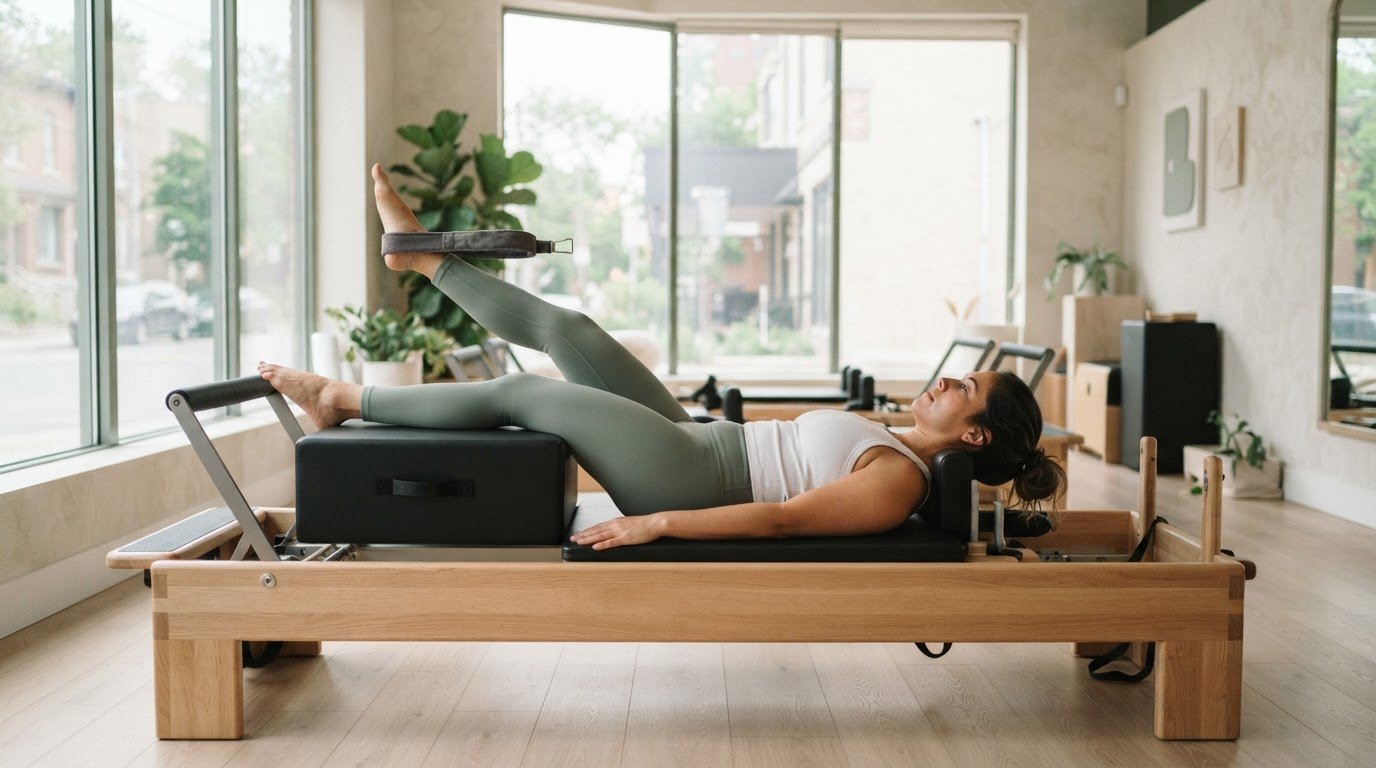
A supported hamstring stretch gives the back of the thigh focused attention without requiring a forceful pull. Settle into a position where your pelvis can stay steady. Extend one leg only as far as you can while keeping your lower back comfortable. The stretch should feel gradual, not sharp. Maintaining control matters more than reaching a particular leg height.
Use at least 30 seconds as a goal for holding the supported stretch. Start with one side, then change legs so both sides receive attention. Keep breathing normally throughout the hold. If your shoulders tighten or your pelvis begins to roll, reduce the leg’s range. A smaller position that stays controlled is more useful than a deeper position held with strain.
- Set your position: Lie comfortably on the carriage, with your pelvis level.
- Support the leg: Hold behind the thigh or use a comfortable support.
- Extend gradually: Raise or straighten the leg until you feel a mild stretch.
- Hold and breathe: Stay for at least 30 seconds without forcing the range.
- Change sides: Lower with control, reset, then repeat on the other leg.
Keep your supporting leg relaxed and your spine settled. For example, if straightening the raised leg pulls your pelvis off the carriage, soften the knee. This adjustment can reduce tension while keeping the stretch focused along the back of the thigh. Avoid bouncing or tugging. Let each exhale help you release unnecessary effort rather than push farther.
Notice where you feel the stretch. A broad, mild pull along the hamstring is different from a sharp or pinching feeling near the knee or hip. If the position feels uncomfortable, bend your knee more or lower the leg. Don’t chase symmetry by forcing one side to match the other. Each leg can use a different range while you keep the setup steady.
For a Reformer-based variation, keep the carriage still before settling into the stretch. Choose a position that lets you support your leg without gripping the foot or locking the knee. A strap may help some practitioners maintain support, but it shouldn’t pull the leg beyond a comfortable range. Move out of the stretch slowly, then place your foot down with control.
Use the hold as a quiet pause within the cool-down, not a test of flexibility. Keep your breathing even, your pelvis stable, and your shoulders soft. Repeat the same sequence on each side, adjusting the knee bend or leg height as needed. These simple choices make the stretch deliberate and easier to include in a calm Reformer finish.
Hip alignment during stretches
Stable hips help keep a stretch focused instead of letting your pelvis rotate to create extra range. On the Reformer, begin by settling both sides of your pelvis evenly on the carriage. Notice whether one hip lifts or rolls as you move a leg. If it does, reduce the stretch and reset before continuing.
During a supported hamstring stretch, keep your hip points facing the ceiling. Raise one leg only while the opposite side stays heavy on the carriage. For example, if lifting your right leg pulls your right hip upward, lower the leg slightly or soften its knee. A smaller range makes it easier to keep your pelvis steady.
- Set your base: Place your pelvis evenly on the carriage before moving.
- Check the sides: Notice whether one hip lifts, rolls, or shifts.
- Adjust the leg: Lower it or bend the knee if alignment changes.
- Keep the breath easy: Continue only while your torso stays relaxed.
- Reset between sides: Return both legs to a comfortable position before switching.
A seated stretch needs the same attention. If one leg is extended, keep both sides of your pelvis grounded rather than leaning away from that leg. For example, move your chest forward a little while keeping your hips facing ahead. Stop the reach before your pelvis turns or one sitting bone lifts.
Use the carriage as a reference point. Before a stretch, notice where your pelvis contacts the surface. As you move, check whether that contact changes. A gradual shift can be easy to miss when you focus only on the stretched leg. Pause, soften the range, and return to your starting position if your pelvis begins to rock.
Your breathing can also reveal when a stretch has become too demanding. If you hold your breath while keeping your hips level, reduce the range. Try bending your knee, bringing the leg closer to your body, or easing your torso upright. Choose the adjustment that lets you breathe freely and keep both hips steady.
- Pelvis lifts: Reduce the leg height or bend the knee.
- Pelvis rolls: Return to center, then restart with less range.
- Torso leans: Sit taller or bring your chest forward less.
- Breath tightens: Pause and choose an easier position.
Repeat the same alignment check on each side, without forcing both legs to reach the same height. One side may need a different knee bend or starting position. The useful measure is whether your pelvis stays steady through the stretch, not whether both sides look identical. This simple check keeps your movement controlled throughout a Reformer cool-down.
Long Box-supported cool-down flow
You can do cool-down stretches on the Reformer or a mat. A Long Box offers support for movements such as gentle spinal extension, while a mat provides a stable surface for floor stretches.
For your hips and hamstrings, choose a supported hamstring stretch and a comfortable hip-opening position. For your back, use a small Long Box extension; for your shoulders, try slow shoulder rolls without forcing the range.
Use this five-minute Long Box sequence as a framework, not a race. Start by securing the box. Choose springs that help keep the Reformer stable while allowing movement. Spring tension isn't critical; choose springs that keep the box stable while allowing movement.
- Set up: Check that the box stays stable before placing your body on it.
- Settle: Lie prone over the box with your chest supported and shoulders relaxed.
- Extend: Inhale to prepare, then exhale as your breastbone glides slightly forward and upward.
- Lower: Return slowly, keeping your neck long and your movement controlled.
- Finish: Move into a roll down to realign the spine.
If you’re a beginner or have limited flexibility, shorten the movement and bend your knees as needed. Keep the box stable, use a smaller extension, and pause whenever your breathing becomes strained. A supported position with less range gives you a clear way to practice control without forcing a deeper stretch.
Avoid bouncing, abrupt transitions, or pushing into a painful range after class. These choices can make movement harder to control, especially on a moving carriage. For example, step out of a stretch slowly and check the box before changing positions. Keep the flow smooth instead of adding another demanding challenge.
If you have pain, an injury, or are pregnant, choose supported positions and avoid movements that cause pain, pressure, or breath-holding. Follow any movement restrictions already given for your situation. For example, reduce the extension or use a mat-based position if lying over the Long Box feels uncomfortable.
During the five-minute flow, keep transitions simple. Move from supported extension to a comfortable resting position, then finish with the roll down. If the box shifts, stop and stabilize it before continuing. The sequence works best when every movement stays calm, controlled, and easy to exit.
A Long Box is useful, but it isn’t essential for every stretch. Use the Reformer when the box is stable and offers comfortable support; choose a mat when floor positioning feels steadier. The deciding factor is control, not the equipment. Keep the range modest and let the final roll down close the sequence.
Plan a Reformer Pilates class flow## ReformerFlow by Ginty: ReformerFlow App Subscription
ReformerFlow by Ginty’s ReformerFlow App Subscription helps instructors plan Reformer Pilates classes and sequence movements, including a considered finish. Its curated library includes over 400 exercises with video, level, and spring-setup details, making it easier to shape a class around its intended flow. Build a class in about five minutes, then use the exercise details to plan transitions and a controlled closing sequence.
Turn to the app when you want a clearer structure for class planning without starting from a blank page. The 14-Day Free Trial offers a way to explore the subscription. It supports instructors with planning tools; it doesn’t replace individual judgment about movement choices or a participant’s needs.
Visit reformerflow.app to explore ReformerFlow.
Make the final minutes intentional
Make the end of class a deliberate part of your teaching rhythm. Choose movements that fit the session, keep transitions composed, and leave room to adjust each exercise for the people in front of you. A consistent planning approach helps you create effective cool downs for Reformer Pilates without treating the final minutes as an afterthought.
For instructors, the next step is to bring that intention into class planning. Consider how the final movement connects to the work before it and whether the sequence feels coherent from start to finish. Small choices in order and pacing can give each class a clear ending.
If you’re ready to refine how you plan Reformer Pilates classes, explore ReformerFlow by Ginty. Use the app as a planning resource, then apply your own judgment to create a closing sequence that suits your class.
Contact ReformerFlow by GintyBuild a thoughtful finish into your next class plan.
Frequently Asked Questions
What are the most effective cool-down stretches after a Reformer Pilates class?
Choose a few stretches that match the work you’ve just completed. After repeated arm presses, try a gentle chest opener; after footwork, use an easy calf stretch. A seated side reach can add movement through your torso without turning the finish into another workout. Keep the range comfortable and switch sides as needed. Choose movements you can perform smoothly, without bracing or rushing.
What is a simple step-by-step cool-down routine for Reformer Pilates?
Move from active work into a quiet transition, then choose one upper-body stretch and one lower-body stretch. For example, sit upright for a few relaxed shoulder circles, then stand beside the Reformer for an easy calf stretch. Finish by pausing in a comfortable position and noticing whether your breathing has settled. Keep the order simple so you can focus on control instead of remembering a complicated sequence.
How should breathing and movement intensity change during a Pilates cool-down?
Let your breathing return to a natural rhythm as you reduce the effort and speed of each movement. Use less carriage travel and smoother transitions than during the main sequence. A useful cue is whether you can speak a short sentence comfortably while moving. If you need to hold your breath or rush through a transition, pause or choose an easier version before continuing.