
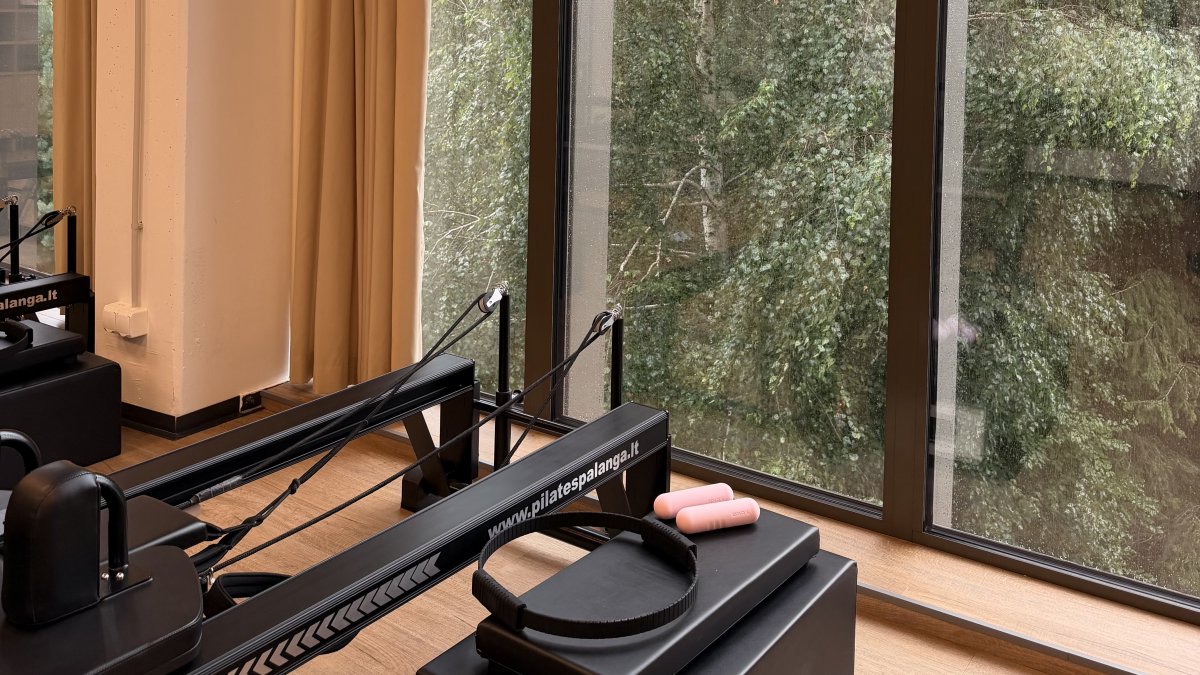
You're forty minutes into a high-energy group class. Your cues are sharp, but your mental battery is draining. You transition the group to a side-lying series and suddenly, you blank. Is it one red? A blue and a yellow? That familiar surge of technical anxiety hits as you realize you're second-guessing how to remember reformer spring settings in front of ten expectant clients. It's a common friction point that leads to cognitive fatigue and disrupted flow.
Every instructor knows the weight of that mental load. Teaching should feel like a creative conversation, not a stressful memory test. This guide will help you master the logic behind reformer tensions and discover systems to eliminate spring-related stress. You'll learn the physics behind the colors and discover how to build a glanceable teaching environment. We'll explore the specific resistance profiles of major brands and introduce strategies to maintain a calm, authoritative presence in every session. By the end, you'll have a clear framework for seamless transitions and professional mastery.
Key Takeaways
- Understand the "Teacher Brain" phenomenon and why decision fatigue often peaks during the final fifteen minutes of a session.
- Decipher the specific tension hierarchies for major brands so you can move between different studios with total technical confidence.
- Implement physical anchors and the "Standard Reset" method to master how to remember reformer spring settings during fast-paced transitions.
- Learn why "glanceability" is the most critical feature of a modern lesson plan and how it protects your mental clarity.
- Discover how a digital co-pilot can automate personalized spring configurations, allowing you to focus entirely on client form and safety.
Table of Contents
- Why Remembering Reformer Spring Settings is a Cognitive Challenge
- The Universal Reformer Spring Configuration Guide: Brand by Brand
- Physical Hacks to Anchor Your Spring Memory
- Building a Fail-Safe System for Your Lesson Plans
- Mastering Spring Transitions with ReformerFlow
Why Remembering Reformer Spring Settings is a Cognitive Challenge
Teaching Pilates is a high-stakes balancing act. You aren't just reciting a script; you're observing biomechanics, correcting alignment, and managing the energy of a room. When you have ten or more clients on reformers, the mental processing power required is immense. This "Teacher Brain" phenomenon means your executive function is constantly occupied with safety and form. Technical details like how to remember reformer spring settings often feel like the final weight that exhausts your cognitive bandwidth.
Precision is the cornerstone of the history of the Pilates method. If a client is on a spring that is too heavy during a core-focused exercise, they might compensate with their hip flexors or lower back. Conversely, a spring that is too light during a stability-focused movement can lead to a loss of control and potential injury. The stakes are high, yet the environment is designed for distraction. When your focus is split between a client's posture and the technicalities of the machine, something has to give.
The Science of Decision Fatigue in the Studio
Research into decision fatigue suggests that the quality of our choices deteriorates after a long period of decision-making. In a 50-minute session, an instructor makes hundreds of micro-decisions. You decide when to progress a movement, which tactile cue to use, and how to adjust the music volume. By the final fifteen minutes of class, your cognitive reserves are depleted. This is why you might flawlessly cue the warm-up but struggle to recall the tension for a side-lying leg series at the end of the hour. It isn't a failure of memory; it's a biological limit of your focus.
The Inconsistency of Global Reformer Standards
The challenge is compounded by a lack of industry standardization. There is no universal color code. A blue spring on a Balanced Body machine represents light resistance, while a blue spring on a Merrithew reformer indicates medium tension. If you teach at multiple studios, your brain must constantly run a "translation layer" to convert your class plan into the local equipment's language. This mental math adds an unnecessary layer of friction to your teaching. When you're moving between brands, the risk of technical errors increases, which directly impacts the efficacy of the workout and your own professional confidence.
The Universal Reformer Spring Configuration Guide: Brand by Brand
Understanding the specific mechanics of your equipment is the first step toward technical mastery. While the exercises remain consistent, the resistance profiles vary significantly between manufacturers. This variability is the primary reason why instructors struggle with how to remember reformer spring settings when transitioning between studios. Mastering the logic of each brand is the most effective way to learn how to remember reformer spring settings without relying on rote memorization.
Balanced Body utilizes a four-color system that is widely considered the modern standard. Green represents heavy resistance. Red serves as the medium baseline. Blue is light, and Yellow provides very light tension for intricate stability work. Most contemporary class plans are built around this specific hierarchy.
Merrithew (STOTT PILATES) operates on a percentage-based logic that requires a different mental approach. Black is extra-heavy. Red is considered 100% tension. Blue is 50%, and White is 25%. This system allows for precise adjustments, especially in clinical or rehabilitative settings where incremental progress is vital.
Peak Pilates and BASI systems often simplify the palette but maintain distinct identities. Peak uses Red (heavy), Yellow (medium), and Blue (light). BASI reformers are known for their precision, often featuring a specific spring bar setup that emphasizes balanced tension across the carriage.
Classical reformers, such as those by Gratz or Contrology, bypass color coding entirely. All four springs provide equal, heavy resistance. In this system, the challenge isn't the weight of the spring; it's the control required to move a heavy carriage with grace. The focus shifts from resistance training to pure body mechanics.
Decoding Contemporary Spring Colors
The Red spring serves as the industry's medium standard, representing the baseline for most footwork and leg series. While Balanced Body Blue and Merrithew White both signify "light" resistance, their actual tension levels are not identical. The shift from four to five springs in modern designs provides the nuance needed for athletic progressions that classical machines don't offer.
Classical vs. Contemporary Spring Logic
Classical philosophy uses uniform resistance to challenge the body's control against a consistent, heavy load. Contemporary logic favors granular progression, allowing instructors to isolate specific muscle groups with high precision. For a deeper technical breakdown of these differences, consult our Reformer Pilates Machine Spring Setup: The Professional Instructor's Reference Guide.
You can simplify your session prep and test our glanceable teaching mode to see how it handles these brand differences for you.
Physical Hacks to Anchor Your Spring Memory
Memory is often the first casualty of a high-energy session. While knowing the brand-specific logic is essential, you need physical systems to act as a safety net. These anchors allow you to maintain your flow without constantly checking your notes. Learning how to remember reformer spring settings effectively often comes down to reducing the number of variables you have to track. By creating a predictable environment, you free up your mental energy for high-level cueing.
Visual metaphors provide an immediate mental shortcut. Associate Blue with water or the sky to signal a light, fluid resistance. Link Red to the heart or blood to represent your standard, medium baseline. Green, the color of the earth, naturally anchors you to a heavy, grounded tension. These associations bypass the analytical brain and tap into intuitive recognition. When you stop thinking in numbers and start thinking in metaphors, the technical details become second nature.
Tactile cues provide a final layer of certainty. Develop the habit of pulling the carriage slightly before a client boards the machine. This quick physical check confirms the tension matches your cue. It prevents the jarring experience of a carriage that's unexpectedly heavy or light. This small movement acts as a physical "double-check" that builds your confidence and protects client safety.
The Standard Reset Strategy
This method eliminates the mental math of cumulative spring changes. Instead of calculating from wherever the last exercise left off, you always return to a known quantity. It creates a clean slate for your brain and your class.
- Step 1: Choose a "Home Base." For most contemporary sessions, this is two red springs. This is your default setting.
- Step 2: Cue changes relative to this base. Instead of saying "change to one blue," cue the group to move from their home base. This keeps the logic consistent.
- Step 3: Train your clients to reset. At the end of a block, cue the group to return to home base immediately. This ensures every new exercise starts from the same predictable state.
Grouping Exercises by Tension
Constant spring changes are the enemy of class momentum. By organizing your Reformer Pilates class sequence around spring settings, you protect the client's heart rate and your own focus. Transitioning once every ten minutes is far more manageable than transitioning every two minutes.
A "Heavy to Light" flow is often the most intuitive. Begin with footwork and leg series on heavy tension, then gradually strip springs away for core and arm work. This logical progression makes it easier to track how to remember reformer spring settings because the resistance only moves in one direction. Grouping similar tensions minimizes downtime, turning clunky transitions into a seamless experience for your clients.
Building a Fail-Safe System for Your Lesson Plans
Memory is a bottleneck; professional mastery comes from replacing rote memorization with glanceable systems. While physical hacks like the Standard Reset are valuable, they still rely on your ability to recall information under pressure. A truly fail-safe system removes the need for active recall entirely. It allows you to move from asking "What exercise is next?" to knowing "What setup is next?" before you even finish cueing the current movement. This shift in perspective is the secret to how to remember reformer spring settings without the associated stress.
The Problem with Manual Notes
If you're still relying on a handwritten notebook, you're likely experiencing the "Squint Factor." Studios are often dimly lit to create a specific atmosphere. Small handwriting on a clipboard becomes unreadable in these conditions. Fumbling with paper breaks your connection with the room. It signals hesitation to your clients. When you lose eye contact to decipher a scribble, you lose the ability to correct form in real-time. Manual notes are also rigid. If you need to modify an exercise for a client with an injury, a paper plan can't instantly recalculate the necessary spring adjustments.
Transitioning to Digital Spring Tracking
Glanceability is the most important factor in any modern teaching tool. Your brain processes visual icons significantly faster than text. Seeing a red and blue circle is instantaneous; reading "one red and one blue" requires cognitive effort you don't have to spare. Digital tools simplify how to remember reformer spring settings by providing high-contrast visual cues that are easy to read from a distance. By syncing your plans across an iPhone, iPad, or Android device, you gain studio mobility that paper can't match. You can place your device on a nearby shelf or window sill and see exactly what you need from several feet away.
A digital system should be "set and forget" during the teaching phase. You do the heavy lifting during your prep time, and the tool acts as your co-pilot during the session. Using a glanceable class view ensures you stay present with your clients. You spend less time looking at your notes and more time observing their movement. This increased presence builds deep client trust and elevates the overall quality of your instruction. When the technical details are automated, your creative teaching can truly flourish.
Start your 14-day free trial## Mastering Spring Transitions with ReformerFlow
Mastery in the studio isn't about having a perfect memory. It's about having better systems. While physical anchors and sequencing strategies provide a solid foundation, technology offers a way to bypass the cognitive bottleneck entirely. ReformerFlow by Ginty acts as a digital co-pilot. It handles the technical calculations so you can remain fully present with your clients. By automating the technicalities of how to remember reformer spring settings, you reclaim the mental space needed for high-level biomechanical observation.
The app is built on a curated library of over 400 exercises, each with pre-populated spring details. This data allows you to build a sophisticated, balanced class in less than five minutes. Instead of manually entering every tension setting, you simply select your movements and let the system handle the rest. This efficiency reduces your preparation time significantly, allowing you to focus on the "Science of Flow" rather than the logistics of equipment setup.
Personalized Machine Configurations
One of the most significant professional friction points is moving between studios with different equipment. You shouldn't have to run mental math to translate your plan from a Balanced Body Allegro to a Merrithew reformer. Within ReformerFlow by Ginty, you simply select your specific machine brand. The app automatically translates "Heavy," "Medium," and "Light" into the exact color codes for that hardware. This ensures total technical consistency. Whether you teach at one boutique studio or three different locations, your technical cues remain sharp and accurate without any extra effort.
The Glanceable Teaching Experience
Teaching Mode is designed for the reality of a live class. It utilizes high-contrast icons that are legible from a distance, even in low-light environments. This visual clarity solves the problem of how to remember reformer spring settings during the most intense parts of your session. You don't have to "use the app" while you teach; you simply glance at it. This allows you to stay "out of the app" and "in the room" with your clients.
Professional mastery comes from reducing your cognitive load. When you trust your system, your confidence increases. Your transitions become seamless. Your clients feel the difference in your composure and the flow of the class. It's time to move beyond manual notes and embrace a more streamlined approach to instruction.
Get the ReformerFlow by Ginty app and start your 14-day free trial## Elevate Your Teaching Composure
Professional mastery in the studio is built on systems, not just memory. By understanding the underlying logic of your specific equipment and implementing physical anchors like the Standard Reset, you reduce the cognitive load that leads to teacher fatigue. You no longer need to stress over how to remember reformer spring settings while your clients are mid-movement. Instead, you can focus on the biomechanics and energy that make your classes unique.
ReformerFlow was designed by Ginty, a professional instructor who understands these studio pressures firsthand. The app provides a curated library of 400+ exercises with video and automatically customizes every setting to your specific reformer brand. It acts as your digital co-pilot, ensuring your technical cues are always sharp and your transitions are always seamless. This level of organization protects your time and your mental clarity.
Start teaching with confidence: Get ReformerFlow for 14 days freeTrust your preparation and your tools. When you step into the room with technical clarity, your clients feel the difference in every cue. You've done the work; now enjoy the flow.
Frequently Asked Questions
How do I know if a spring needs to be replaced?
Springs should be replaced if you notice gaps between the coils or visible kinks in the metal. Professional standards suggest replacing all springs every two years or after approximately 3,000 hours of use. Regular inspection prevents sudden breakage during a session. If a spring feels "dead" or lacks its original snap, it's likely lost its structural integrity. Prioritize client safety by keeping a maintenance log for every machine in your studio.
What is the standard spring setting for Footwork on a Balanced Body Reformer?
The standard setting for Footwork is typically three red springs and one blue spring. This configuration provides a heavy, stable base that allows clients to focus on alignment and leg power. Stronger clients may prefer four red springs for more resistance. Conversely, if a client is recovering from an injury, you might reduce the tension to two red springs. Consistency in this starting point is key to how to remember reformer spring settings across your entire class.
Can I use one brand of springs on a different brand of Reformer?
No, you should never mix spring brands on a single reformer. Each manufacturer designs springs with specific lengths, hook styles, and tension ratings tailored to their carriage's weight and travel distance. Using incompatible springs can cause the carriage to derail or the hooks to fail under load. This creates a significant safety hazard for your clients. Always purchase replacement parts directly from your equipment's manufacturer to maintain the machine's mechanical integrity.
How do I translate "half a spring" across different machines?
Translating "half a spring" requires understanding each brand's specific tension hierarchy. On a Balanced Body reformer, the blue spring is the standard 50% or "half" tension. On a Merrithew machine, the blue spring also represents 50% of the standard red spring's tension. This commonality makes it easier to learn how to remember reformer spring settings when moving between contemporary studios. Always verify the specific color code of the studio's equipment before your session begins.
Is it better to teach with heavy or light springs for beginners?
Beginners generally benefit from heavier springs during footwork to provide a sense of stability and feedback. Heavy tension helps them feel the connection to the carriage and prevents "skating" or loss of control. However, for core-focused exercises like the Hundred, lighter springs are often safer to prevent hip flexor dominance. Mastery involves adjusting tension to match the beginner's current strength while ensuring the machine supports their form rather than challenging their balance too early.
How can I help my clients remember their own spring settings?
Help clients by using visual metaphors or a "Standard Reset" to a home base. You can encourage them to associate colors with intensity, such as "Red for Power" or "Blue for Fluidity." In a group setting, consistently cueing the reset to two red springs at the end of each block builds a physical habit. This repetition empowers clients to take ownership of their setup, which reduces the cognitive load on you as the instructor.
What is the "Z-spring" or "Yellow spring" usually used for?
The yellow spring represents very light resistance, often used for intricate arm work or neurological rehabilitation. It provides just enough tension to guide the movement without overwhelming small stabilizer muscles. In contemporary athletic Pilates, it's also used to add a subtle layer of instability to advanced core exercises. This "quarter-spring" setting requires high levels of eccentric control. It's an essential tool for fine-tuning a client's coordination and balance.
Why do classical reformers not use color-coded springs?
Classical reformers utilize four identical, heavy springs to reflect Joseph Pilates' original design philosophy. This uniform resistance forces the practitioner to develop internal control rather than relying on the machine to vary the intensity. In the classical method, the challenge comes from how you move the weight, not from changing the weight itself. This simplicity eliminates the need for color coding and shifts the instructor's focus entirely toward the client's movement quality and precision.